
Late Roman Necropolis in Armeni, Crete
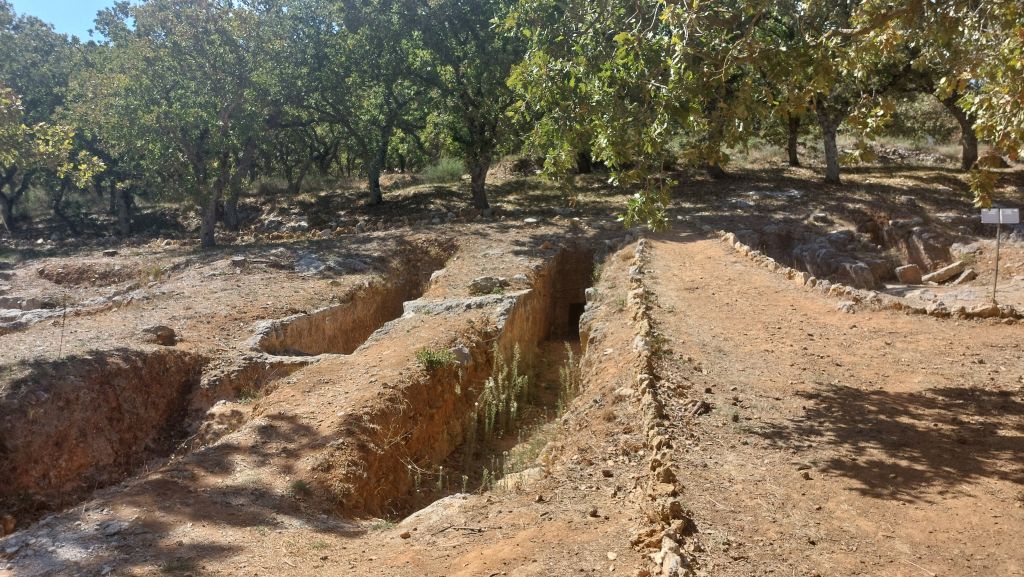
A short distance from Rethymno, just 9 km away via a comfortable asphalt road heading south, lies a cemetery dated between 1425 and 1210 BC. It is the largest discovered so far in Crete, and also the most thoroughly investigated.
What is interesting is how it was discovered. According to one hypothesis, it was quite by chance that a shepherd grazing sheep stumbled upon the tombs, although according to the current version, it was two students living in a nearby village.
Research has shown that the cemetery was intended for the residents of the settlement at that time, excavated in the nearby village of Kastellos, 2 km away. This hypothesis is supported by the discovery of a Minoan road connecting the southern part of the cemetery with the village. It was made from rough stone pieces embedded in the ground and was reinforced with low retaining walls.
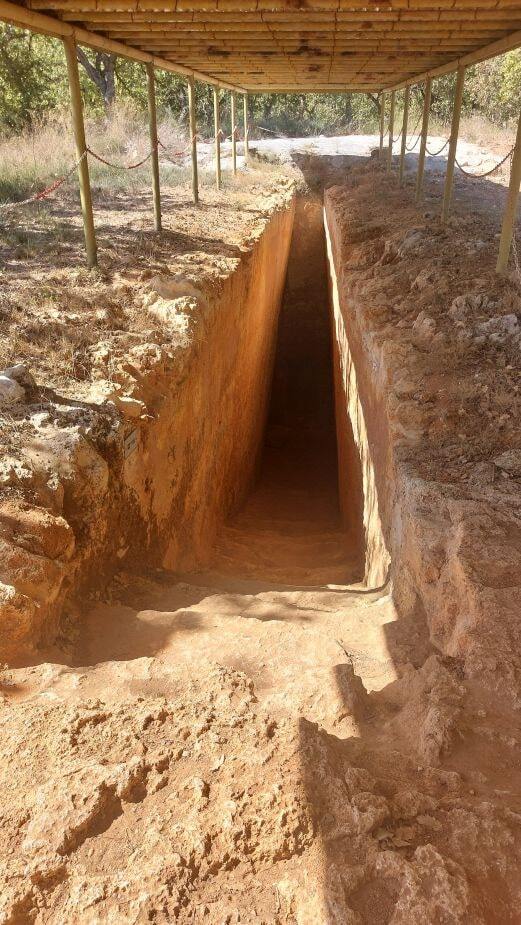
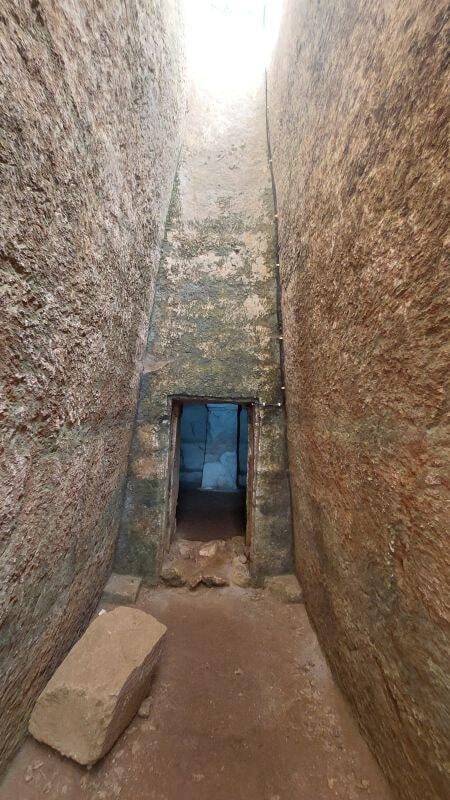
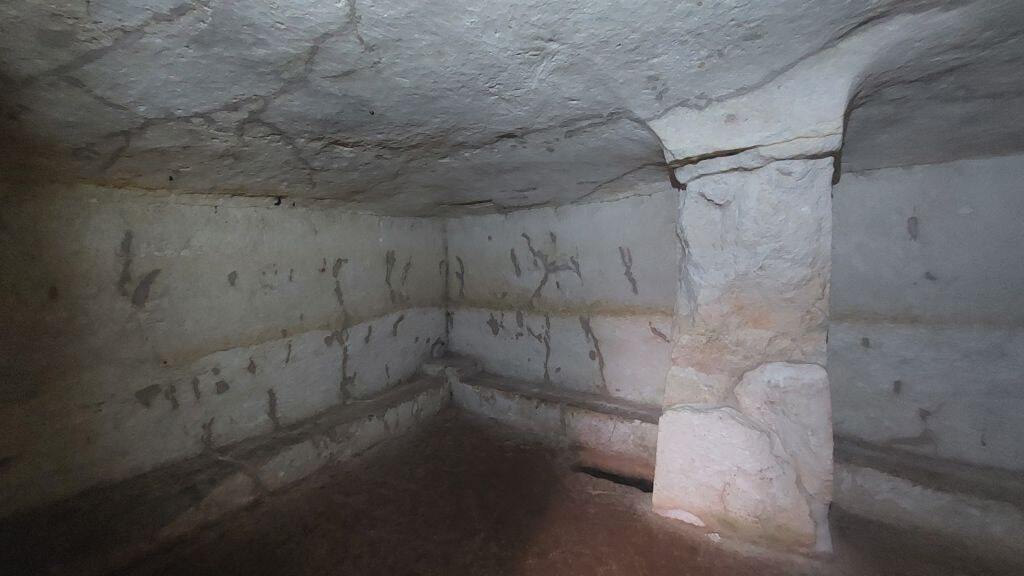
The choice of location for the cemetery was undoubtedly well thought out. The soft, limestone substrate was easy to carve a long corridor, known as a dromos, leading to a spacious burial chamber covered by a large stone slab.
In Armeni, a total of 233 tombs of varying sizes were found. The decorations, although generally modest, along with the discovered items, artifacts, and vessels related to burial rituals, indicated the wealth and social status of the buried individuals. The earliest, oldest, and richest were placed less frequently. Later ones, likely due to a lack of space, were positioned much more densely. The largest concentration was found in the eastern part of the necropolis, where as many as 118 graves were uncovered.
In some tombs, or rather in the entrance corridors, vessels intended mainly for drinking and kitchen utensils were found, which were undoubtedly related to burial rituals.
The deceased were most often laid directly on the floor, although in several cases, bones were found in clay boxes. The tombs were reused multiple times for close family members.
Thorough studies were conducted on the remains of about a thousand deceased individuals. It was found that mortality was very high, especially among children. The average lifespan was extremely short; men typically did not survive past 30, and women past 25 years of age.Such young deaths, particularly among women, were caused by bone cancer, tuberculosis, brucellosis (a zoonotic disease), accidents, or... dental caries. Women often died during childbirth. Men averaged a height of 167 cm, while women averaged 154 cm.
Visiting the necropolis in Armeni
All tombs are numbered, and the largest and richest are also described.
The largest tomb is marked with the number 159. It dates from the period between 1385 and 1240 BC. The impressive dromos has 24 steps and is 15.5 m long. In the center of the rectangular burial chamber is a pillar supporting the vault. There is a stone bench around the walls. In addition to vessels, remnants of a wooden coffin were also found here.
Tomb number 200 is the only tomb with a circular chamber, of the tholos type. Inside it, weapons made of bronze, ceramics, beads, and an amulet with an inscription in Linear A script were found. The tomb is dated to the early 14th century BC.