
Emir Zade Mosque in Chalkida on Evia
In the 15th century, precisely on July 12, 1470, after a very bloody siege, the city Chalkis, then known as Negroponte, came under the control of another occupier, the Ottoman Empire.
Turkey introduced a new religion, very different from Christianity.
New temples quickly emerged, or existing churches were adapted to the needs of the Muslim religion.
According to records of an Ottoman traveler from the 17th century, in the area of Chalkis, the Ottoman Turkey built 11 mosques.
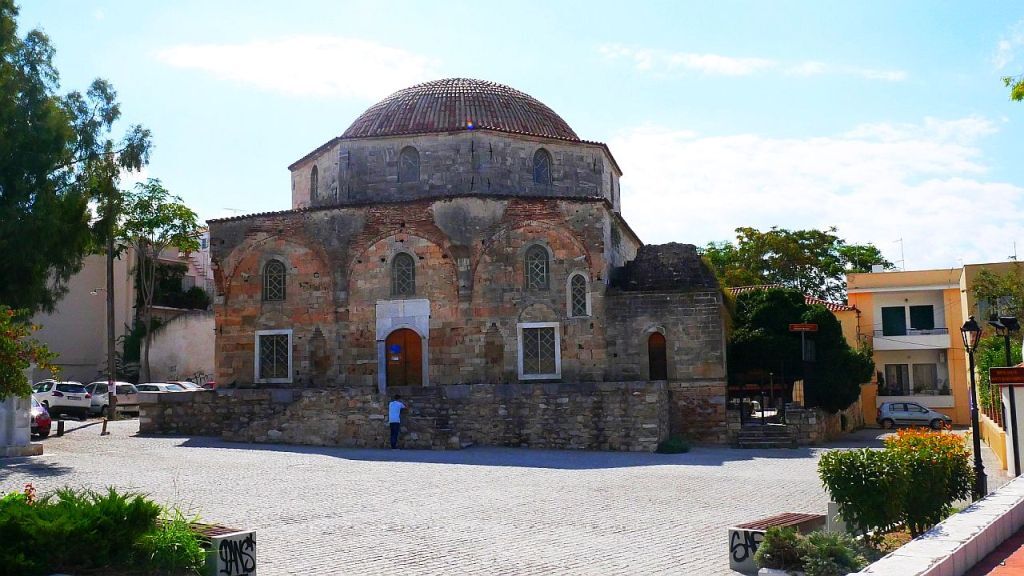
The Emir Zade Mosque is the only preserved mosque in Chalkis.
It was built at the end of the 15th century after the conquest of Evia, probably on the site of an existing Christian church.
The name of the mosque comes from the words emir, meaning ruler of the emirate, and zade, meaning son, which together means: "mosque of the son of the emir."
The temple has survived to this day in quite good condition.
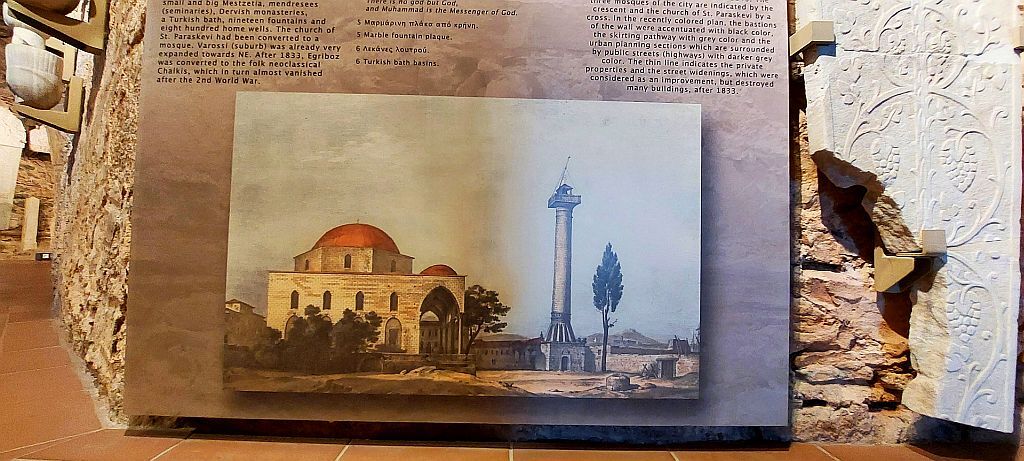
The portico, which is the entrance roof supported by columns, and the minaret, which is the tower from which the faithful were called to prayer five times a day, have not survived. Only the square base remains of the minaret. It is believed that both details remained intact until about the mid-19th century.
Four inscriptions have survived, one of which contains the date 1742/43, probably related to the renovation of the mosque.
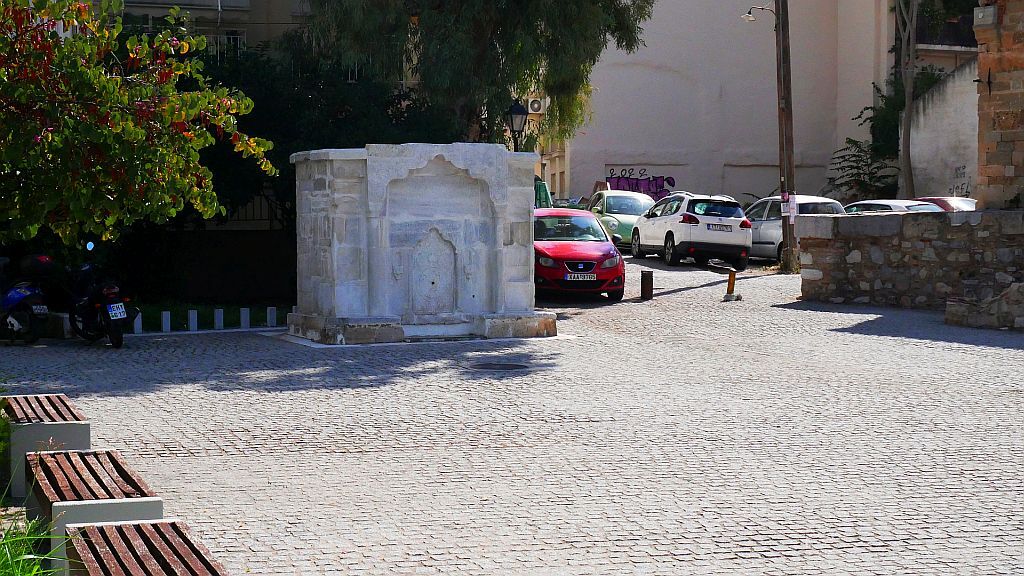
In the square in front of the mosque stands a marble fountain, adorned with reliefs in the Arabic style.
It is presumed that the fountain and the aqueduct were connected to a large underground water reservoir located under the Square of the Fallen Hoplites.
After the liberation of Chalkis from the Ottoman occupier, the mosque served as military barracks and a gunpowder store.
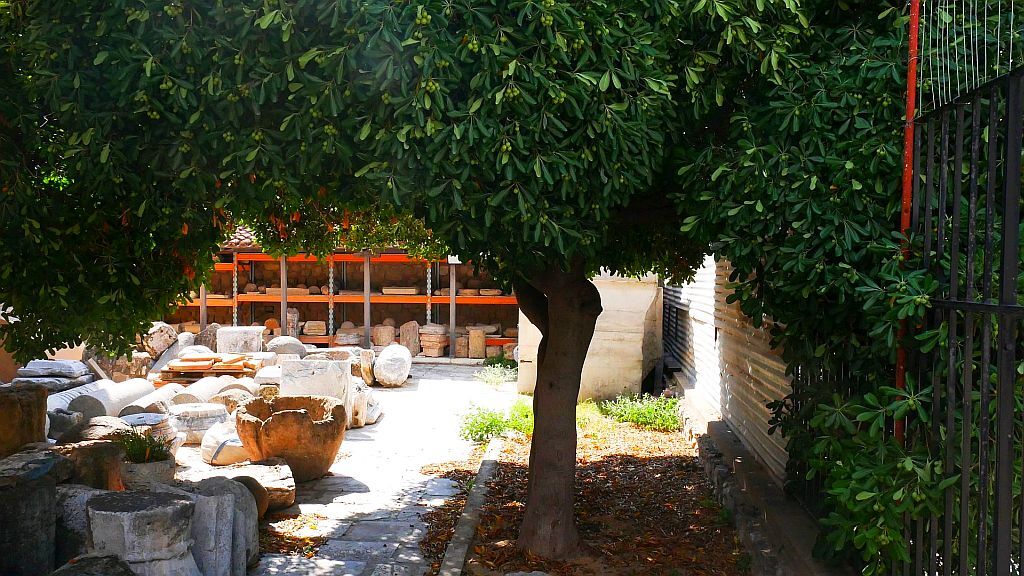
In 1937, the building was recognized as a historical monument. For many years it served as a storage place for sculptures from Evia.
Currently, the monument is closed. It is only occasionally made available to visitors during cultural events.