Karababa Castle, Chalkida in Euboea
The Karababa Fortress, although located outside the borders of Chalkis, is today very popular and frequently visited by tourists.
Built on a hill, on the opposite side of the Euripus Strait, it dominates the city. From here, there is a vast panorama of the capital of the island of Euboea.
It is no wonder that this site was chosen for the construction of the fortress, now known as Karababa Castle.
It is difficult to find precise information about how the area was utilized earlier.
It is known that in ancient times, the city was called Kanithos. From this period, a few remnants of buildings and graves have survived.
During the Roman period, the hill was likely fortified.
According to researchers, the area was certainly not fortified during the Byzantine, Venetian, and early Turkish occupation periods.
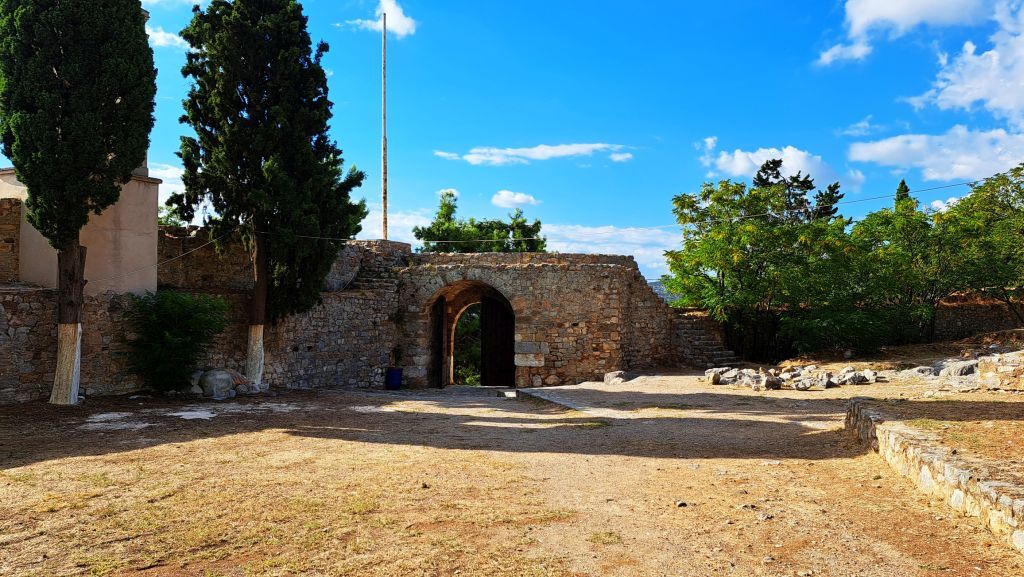
The castle, the remains of which we can admire today, was probably built in 1684 by the Turks to protect Chalkis from the Venetians.
It fulfilled its purpose in 1688 when the fortress was besieged by the Venetians under Morozini.
The Turks managed to hold it until the liberation of Greece, at which point they handed it over to the Greek state.
The fortress, although built by the Turks, was designed by the Venetian architect Gerolimo Galopo, giving it a European appearance.
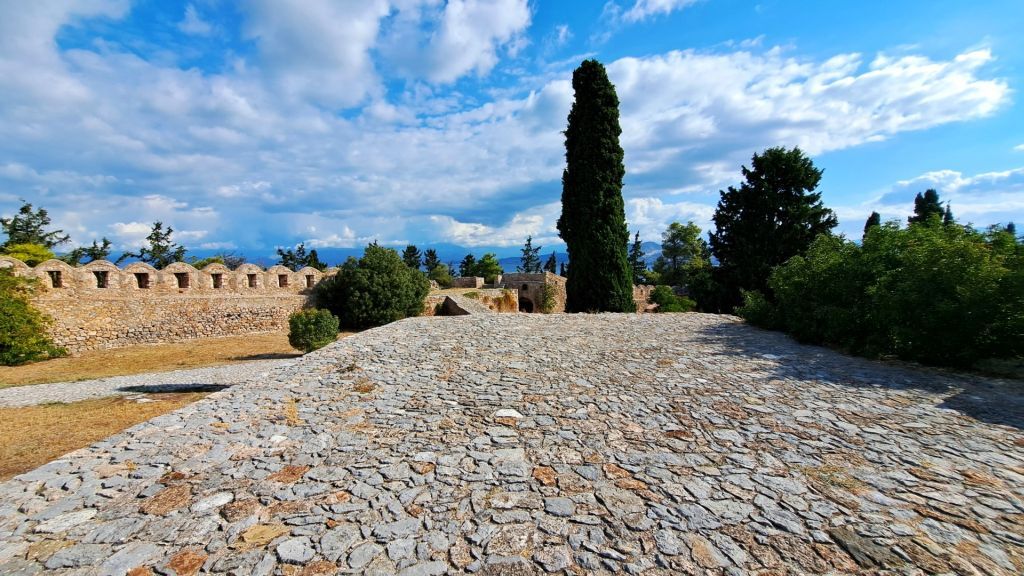
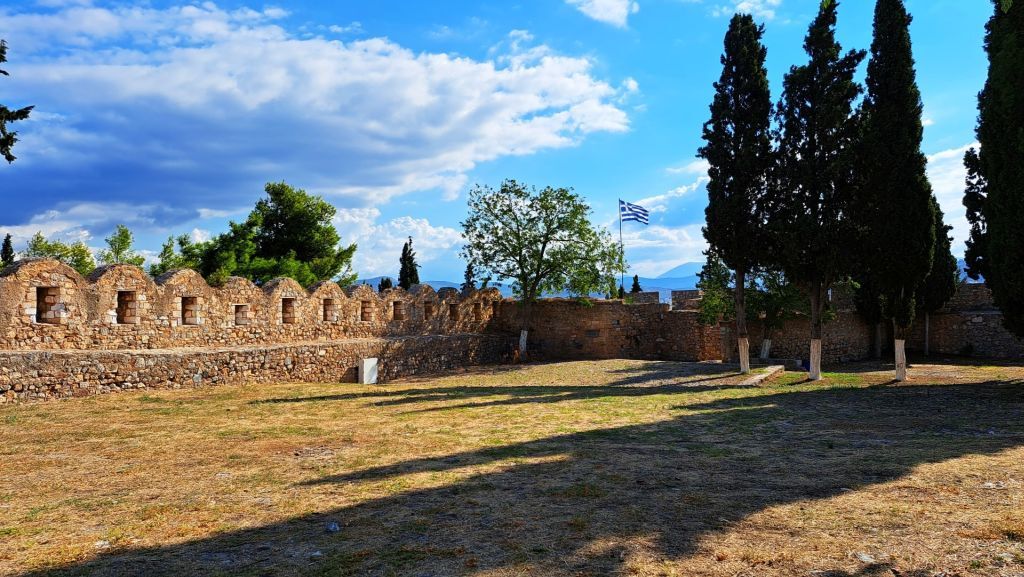
The wall, relatively thin, is open to visitors. It is better preserved on the northern side than on the southern. In some places, you can walk on it to enjoy the views. Three bastions and a tower enhance the joy of visiting, especially for younger tourists. Two large 19th-century cannons are preserved on the walls.
On the grounds of the fortress, there is a small church from 1895, dedicated to the prophet Elijah.
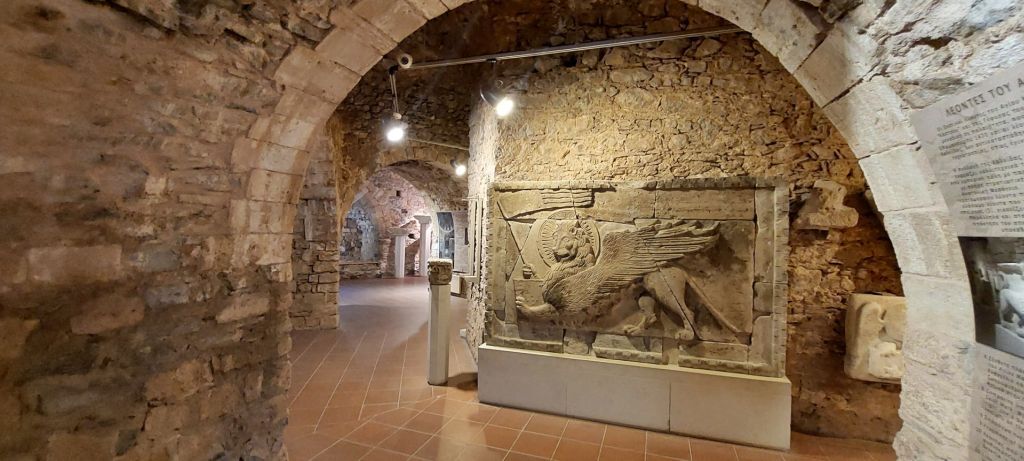
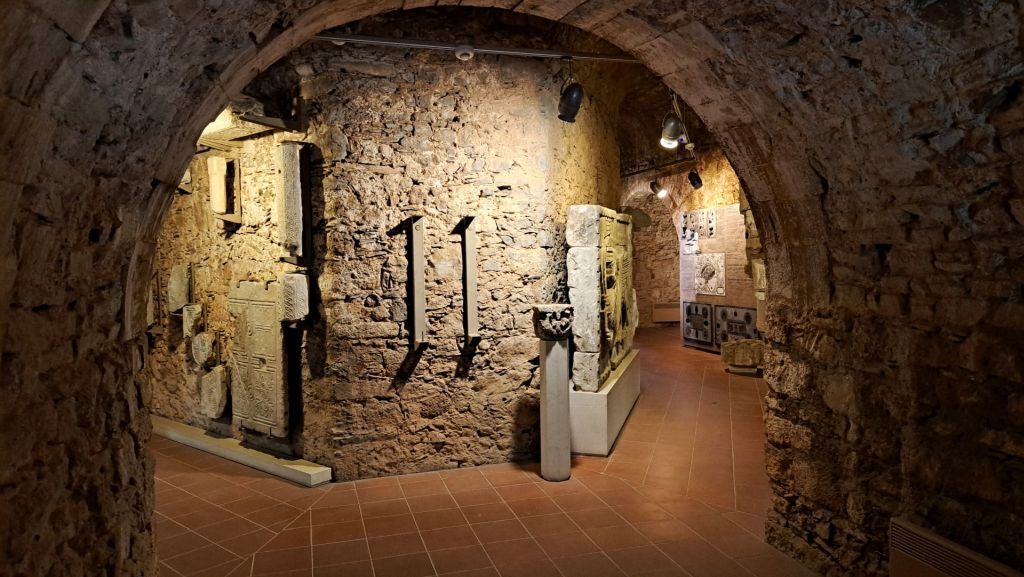
The western end of the walls features a seven-sided tower, which houses a small yet very atmospheric museum.
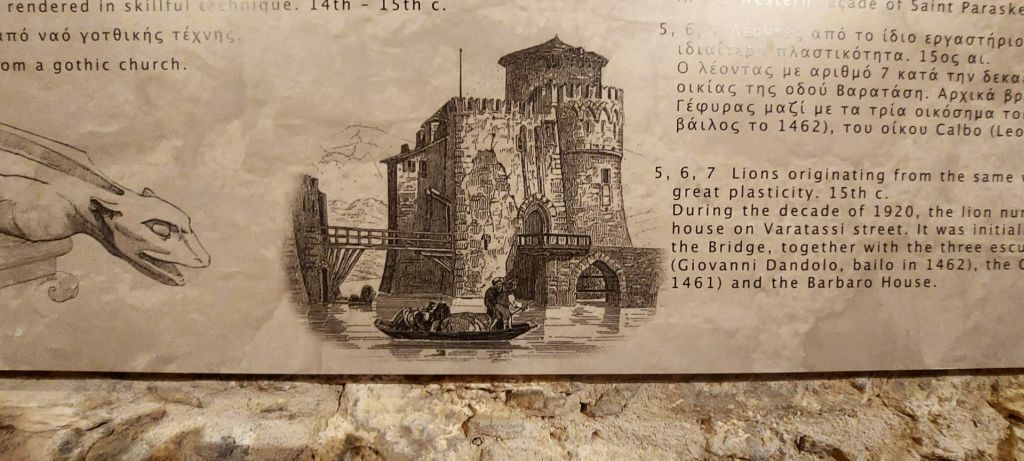
A narrow, stone corridor resembling a labyrinth with arched ceilings hides a collection of sculptures and a wealth of knowledge not only about the castle but also about other monuments in Chalkis. The architectural decorations, church and secular buildings, inscriptions, coats of arms, and tomb reliefs available for visitors are arranged chronologically into the following periods: early Christian, middle Byzantine, Frankish, and Ottoman.
The inscriptions testify to the presence of a Jewish community on the island.
Digression:
The aforementioned Morosini is the same one who built the 15-kilometer aqueduct that brought water to the Morozini fountain in the center of Heraklion on Crete.