
🌋 An Island Built by Volcanoes
Tenerife was not formed all at once. Its oldest parts began to take shape millions of years ago, while successive eruptions gradually built the island we see today. The volcanoes left behind not only Teide, but also solidified lava flows, craters, rocky wastelands and rocks in extraordinary colours.
This is why the landscape of Tenerife can change completely within just a few dozen minutes of travelling. Green slopes give way to black lava, gentle coastlines to steep mountains, and above it all rises Teide.
🏔️ Teide – a Mountain Inside a Giant
Teide stands 3,715 metres high and is the highest peak in Spain. But the mountain itself is only part of a much larger story. The volcano rises within the enormous Las Cañadas caldera – the remains of ancient volcanic processes that transformed the centre of the island over hundreds of thousands of years.
Travelling into the area around Teide is therefore like taking a journey through the geological history of Tenerife. You just need to know what to look for.
🌿 An Island That Changes with Altitude
On Tenerife, sometimes all it takes is a drive of a dozen or so kilometres to find yourself in a completely different world. Altitude plays an enormous role, as does the moist air carried by the trade winds.
On the northern slopes, clouds gather against the mountains and provide moisture for the vegetation. This allows extraordinary laurel forests to grow here. Higher up, the forest disappears and Canary Island pines begin to dominate. Higher still, the harsh world of rocks, lava and plants capable of surviving at altitudes above 2,000 metres begins.
This is why Tenerife does not have just one landscape. It has many, arranged almost in layers.
🌳 Anaga – a Journey into an Ancient World
The Anaga Mountains reveal a completely different side of Tenerife from the area around Teide. Narrow roads wind between steep ridges, while the slopes are covered with humid laurel forests – remnants of vegetation that millions of years ago was much more widespread in this part of the world.
Mist, ferns, twisted branches and green slopes make it difficult to believe that you are still on the same island where, just a short while earlier, you were looking at volcanic wastelands.
⛰️ Masca – a Village Among the Remains of an Ancient Volcano
In the west of Tenerife lies the Teno Massif – one of the oldest parts of the island. Over millions of years, water, landslides and erosion cut through the ancient volcanic mass, leaving behind sharp ridges and deep ravines.
It was within this landscape that Masca was built.
Small houses stand on patches of land between the mountains, while below begins the famous Barranco de Masca, leading towards the Atlantic. Today, we come here for the views. In the past, people simply had to learn how to live here.
🌊 Los Gigantes – Where the Mountains Meet the Ocean
What we see between the mountains in Masca takes on an even more spectacular form beside the ocean. Here, the Teno Massif ends in enormous rock walls.
The cliffs of Los Gigantes rise hundreds of metres above the water in places. They are best seen from the ocean – only then can you truly appreciate their scale.
And once again, places that appear to be separate attractions on a map turn out to be parts of the same story of the island.
👣 Before the Spanish Arrived
Tenerife had its own inhabitants long before the European conquest. The Guanches lived here for centuries, adapting to the conditions of the island. They raised animals, used caves, understood the mountains, water and plants, while the landscape around them was also part of their world of beliefs.
The supreme being in their beliefs was known, among other names, as Achamán. Teide – Echeyde – also held a special place in the world of the Guanches.
Their story will accompany us as we explore Tenerife, because an island is shaped not only by volcanoes and landscapes. It is also shaped by the people who tried to understand it and learned how to live within it.
👀 Tenerife – Look a Little More Closely
On Tenerife, you can simply see Teide, drive along the winding road to Masca, take a photograph of Los Gigantes and walk through the forest in Anaga.
But you can also look a little more closely.
You can wonder why the north of the island is greener. Why clouds often gather at a particular altitude. How the enormous ravines were formed. Why the rocks around Teide have so many different colours. How plants survive high in the mountains and why the inhabitants of Masca chose to live in a place that was so difficult to reach for centuries.
This is how we want to show you Tenerife – not simply by telling you where to go, but above all by helping you understand what you are looking at.
Tenerife – What to See and Why It Is Worth Looking Deeper
Tenerife is much more than beaches and year-round sunshine. At its centre rises mighty Teide, in the west the mountains hide the small village of Masca, the north is covered by the lush, humid forests of Anaga, while the ancient rocks of Teno plunge into the ocean in the form of enormous cliffs.
I will show you not only what is worth seeing on Tenerife, but also why the island looks the way it does. Where did its volcanoes come from? Why do clouds gather on the mountain slopes? How were the deep ravines formed? And where can you find places that reveal completely different faces of Tenerife?
💡 Did You Know That on Tenerife...
The Most Beautiful Places in Tenerife


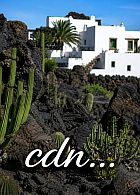
🌋 Tenerife – an Island Worth Understanding
Tenerife can surprise you. At its centre rises the highest peak in Spain, in the north grow lush, humid forests that have their origins in a world millions of years old, while in the west ancient mountains are cut by deep ravines and enormous cliffs plunge almost vertically into the Atlantic. All of this on a single island that you can drive across in just a few hours.
But Tenerife becomes much more fascinating when you start to wonder why it looks the way it does.
📖 Do You Want to Really Get to Know Tenerife?
In the guidebook Tenerife with Achamán, you will discover the island through more than just its most beautiful places. Achamán – the god of the ancient Guanches – will guide you through volcanoes, mountains, forests and coastlines, explaining how they were formed, what happened here centuries ago and what to look out for as you explore. You will also find ready-made itineraries and practical tips to help you plan your trip.
👉 Discover the guidebook: Tenerife with Achamán
volcanic cliffs rise as much as 600 metres above the ocean?
a forest has survived that dates back millions of years?
the village was almost completely cut off from the outside world for centuries?
Spain’s highest peak is an active volcano?
Worth Reading About Tenerife

