Mythological Origins of Lato
It is believed that the main cult in the settlement was dedicated to the little-known Cretan goddess Eileithyia, daughter of Zeus and Hera.
However, the city owes its name to someone else - the Titaness named Leto, also known as Latona or simply Lato.
There are not many memories of Leto herself. It is known that she had an affair with Zeus, which resulted in the famous twins: Artemis and Apollo. She gave birth to them on the island of Delos, where she hid from the Python, which the jealous Hera sent in the form of a serpent to kill her husband's lover.
* Titans and Titanesses are, in Greek mythology, giant gods that existed before the Olympian gods.
Ancient City of Lato
Although the visible excavations today date back to the 4th and 3rd centuries BC, it is known that the period of glory fell around the 7th century BC. This is evidenced by movable finds, such as everyday items and the market and public utility buildings specific to the archaic period.
It is presumed that an organized settlement existed here as early as the 14th century BC, as chamber tombs and vaulted tombs were found a short distance from Lato from that period.
Excavation work aimed at uncovering the oldest settlement would require the destruction of the one that is currently open to visitors. Subsequent eras built over the newly rising structures, thus covering the old buildings, often destroyed by earthquakes or wars.
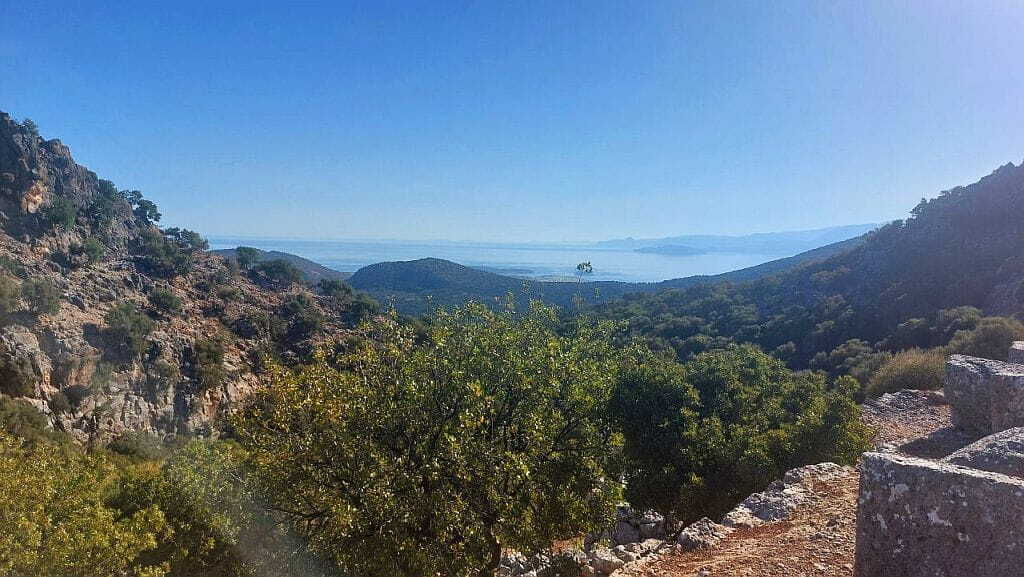
The location of the city seems to be strategic for Lato. The Latians (as the local population was called) built their settlement on a hill 395 meters above sea level. To the west, they were shielded by an adjacent, higher elevation, and from the west, they could observe the entire Mirabello Bay and the present-day Agios Nikolaos, or to the south, the nearby picturesque Kritsa.
Ancient Lato was made famous by Nearchus (360 – 300 BC), a sailor, one of the main commanders of Alexander the Great's army. He is best known for setting sail in the autumn of 325 BC as the commander of a fleet of 800 ships to join forces in Susiana (Iran) with the remaining army in early 324 BC. Furthermore, under the command of Alexander the Great, he participated in the Indian military campaign.
At the turn of the 3rd and 2nd centuries BC, likely due to the strong development of navigation and trade, the Latians began to emigrate to the port city ofKamara, present-day Agios Nikolaos, causing a gradual depopulation of the city.
The most important monuments of ancient Lato
Exploring the ruins is not the easiest task. The path leads continuously uphill, over slippery stones, which is particularly demanding on hot days. It is essential to equip oneself with an adequate amount of drinks, comfortable footwear, and a head covering.
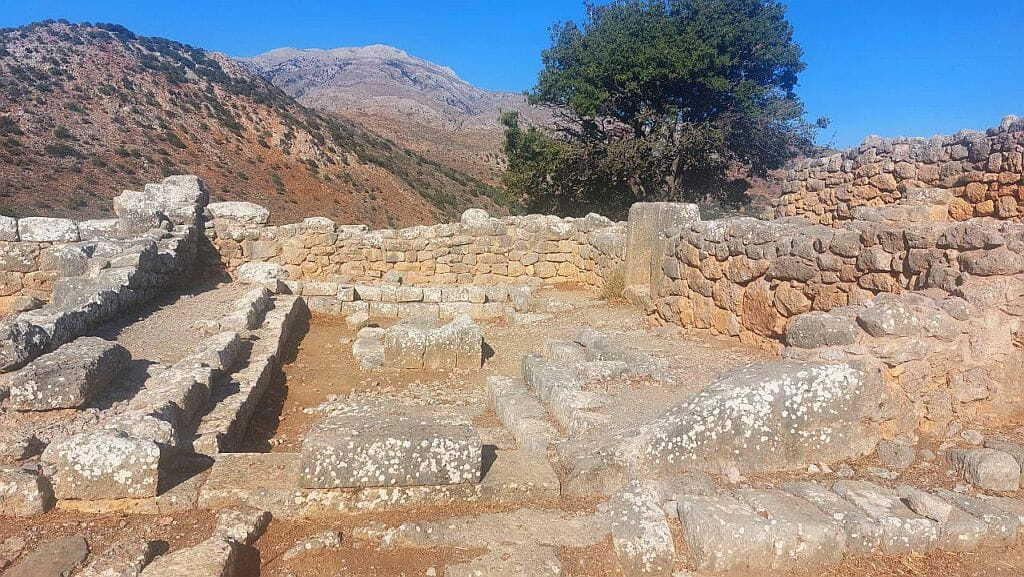
The remains of the city have been made available to visitors in the state they were discovered. There are no added or repainted walls or ceilings. Certainly, the excavations may not interest everyone – they require time, careful reading of descriptions, and the use of imagination.
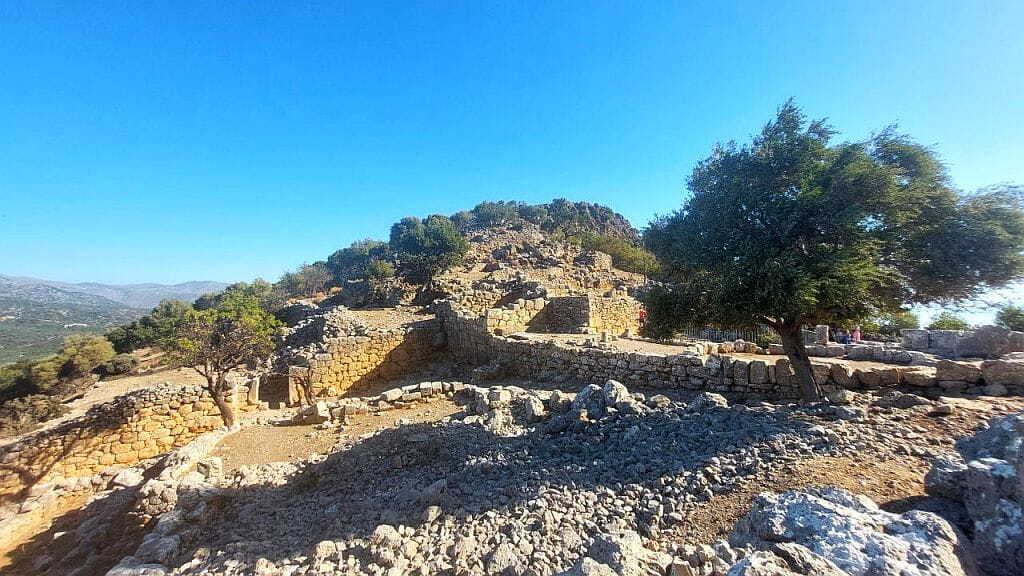
Nevertheless, ancient Lato is regarded as the best-preserved city from the classical period on Crete. Fortifications, residences, a marketplace, temples, and an outdoor theater have been discovered.
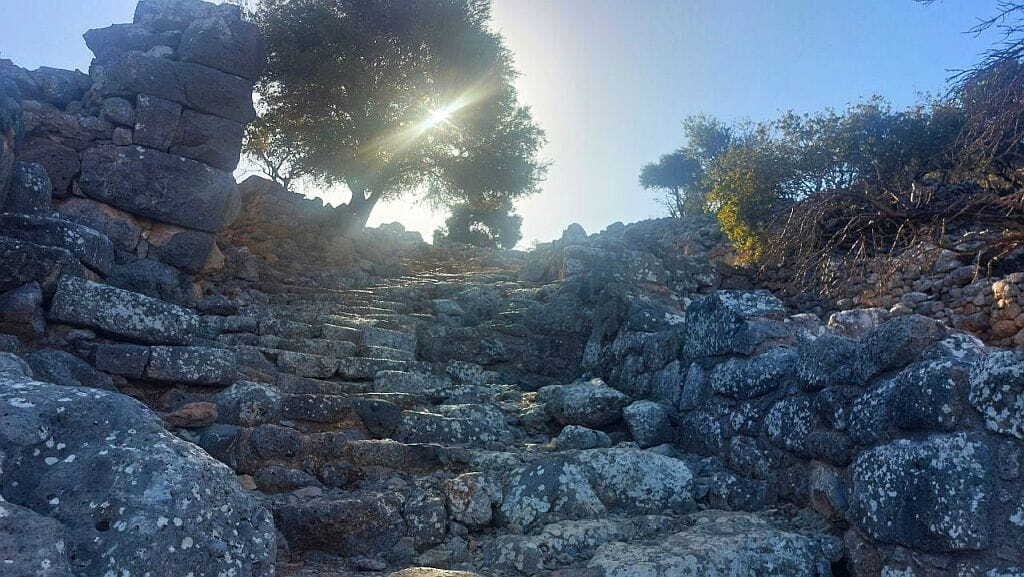
The first stage of visiting ancient Lato requires climbing eighty steps, which is the main street, and passing through several gates leading to the Acropolis. The residential buildings on the left have a simple structure, usually consisting of two rooms with a hearth in the middle. The cisterns carved into the rock, still visible today, served to collect rainwater for household needs. On the right side of the street were shops and workshops.
Due to the sloped location of the settlement, the buildings are characterized by thick walls that also serve as retaining walls. The difference in elevation necessitated a cascading architecture where the ceiling of the lower building serves as the floor of the higher one.
Upon entering the agora, a large space is revealed, from which one can see how strongly fortified ancient Lato was. The well-preserved walls had many gates and watchtowers.
The agora, or marketplace, was a place where public life thrived.
Among other things, it contained:
-
a stoa, which is an elongated colonnade hall providing shelter from the strong sun or rain,
-
a central cistern, notable for its size and depth,
-
a small temple, probably open to the sky. Many figurines dating back to the 6th century BC were found in it,
-
an exedra.
Further north, there was the prytaneion, an area designated for the highest dignitaries and authorities. The monumental complex, resembling an ancient theater where almost eighty people could sit, probably served for public discussions or watching performances. Further stairs led to the upper terrace, from where one could enter the actual "Prytaneion." In the central room, there was a hearth burning day and night, surrounded by two-tiered benches, where eight people could sit. This was the place where the city's dignitaries had their meals and held their meetings.
To the south of the "Agora," on a terrace supported by a retaining wall, the ruins of a large temple of the city measuring 10×16 m have been preserved. It consists of a square cella, where the base for the cult statue remained.
Further east of the temple, on a lower level, there was a "theater area." The audience could accommodate about 350 people. The seats were partially carved into the rock and partially constructed.