🌳 Plane Tree of Hippocrates on Kos
The Plane Tree of Hippocrates is one of the most iconic landmarks on the island of Kos and a must-see attraction for every visitor. Although its true age remains a subject of debate, local legend says that this is where Hippocrates, the Father of Medicine, taught his students beneath its spreading branches. Discover the history of this remarkable tree, the legends surrounding it, and the fascinating landmarks found just a short walk away.
👴 Who Was Hippocrates?
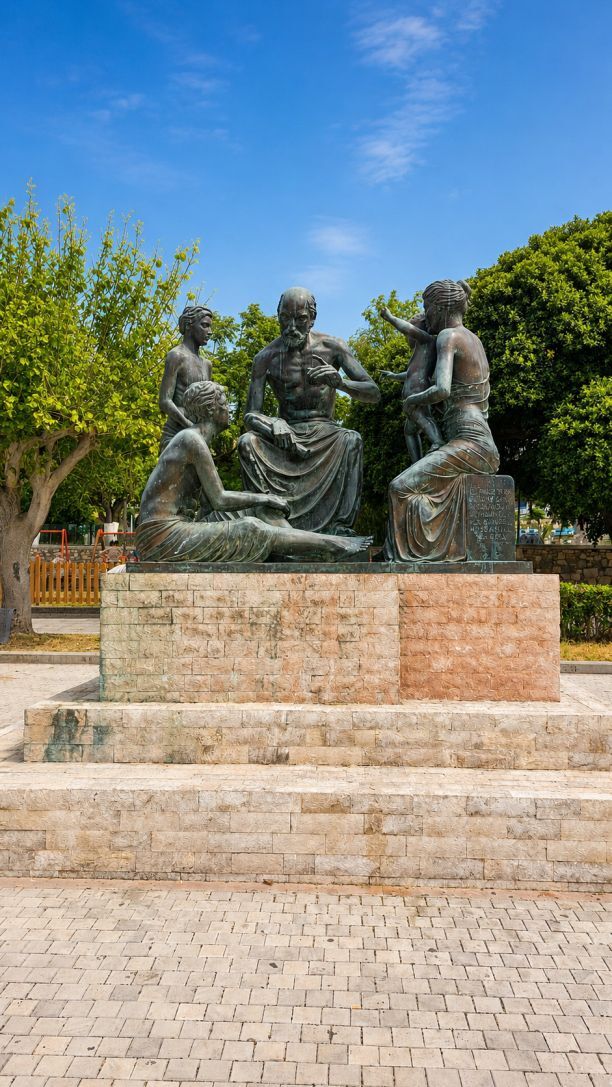
Hippocrates, widely regarded as the Father of Medicine, was born on the island of Kos around 460 BC. He came from a family of physicians—his father, Heraclides, was a doctor who inspired his son's fascination with the art of healing and the study of the human body.
Eager to expand his knowledge, the young Hippocrates traveled to Egypt, one of the greatest centers of science and medicine in the ancient world. After returning, he journeyed extensively throughout Greece, gaining experience and observing different medical practices.
Hippocrates was among the first to argue that diseases have natural causes rather than being punishments from the gods or the work of supernatural forces. He believed that the human body possesses a natural ability to heal itself and that a physician's role is to support this process. He emphasized the importance of a healthy diet, good hygiene, physical activity, and a balanced lifestyle in preventing illness.
His teachings laid the foundations of modern medicine and medical ethics. Hippocrates is best known for the timeless principle, "First, do no harm," which continues to guide physicians around the world. He also introduced many medical terms that remain in use today, including diagnosis, therapy, epidemic, and prognosis.
On the island of Kos, Hippocrates founded a medical school where he and his students developed new methods of treatment and passed their knowledge on to future generations. According to local tradition, it was beneath the shade of the famous Plane Tree of Hippocrates that he taught his students—making the tree one of the island's most treasured historical landmarks.
📜 The Plane Tree of Hippocrates
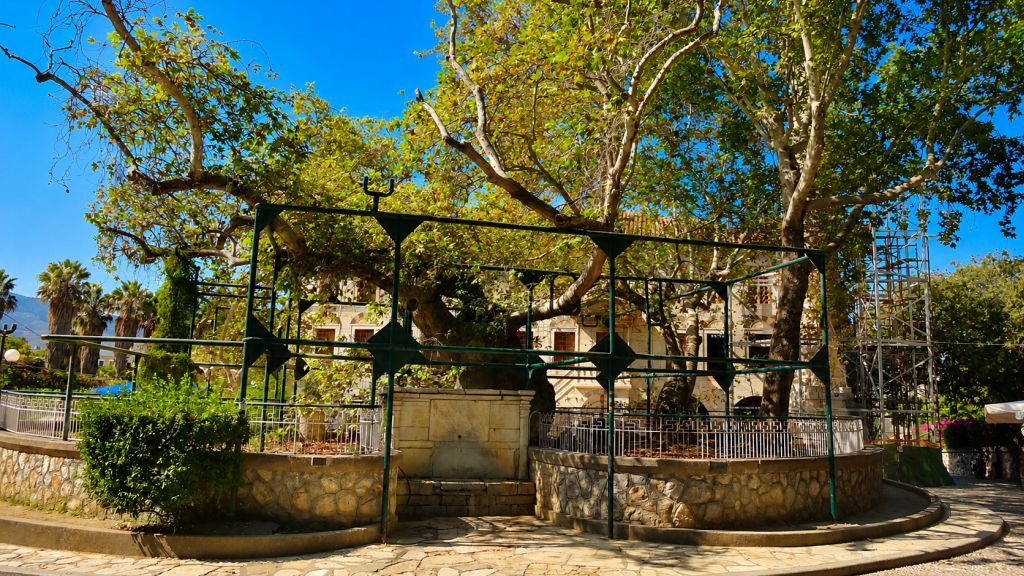
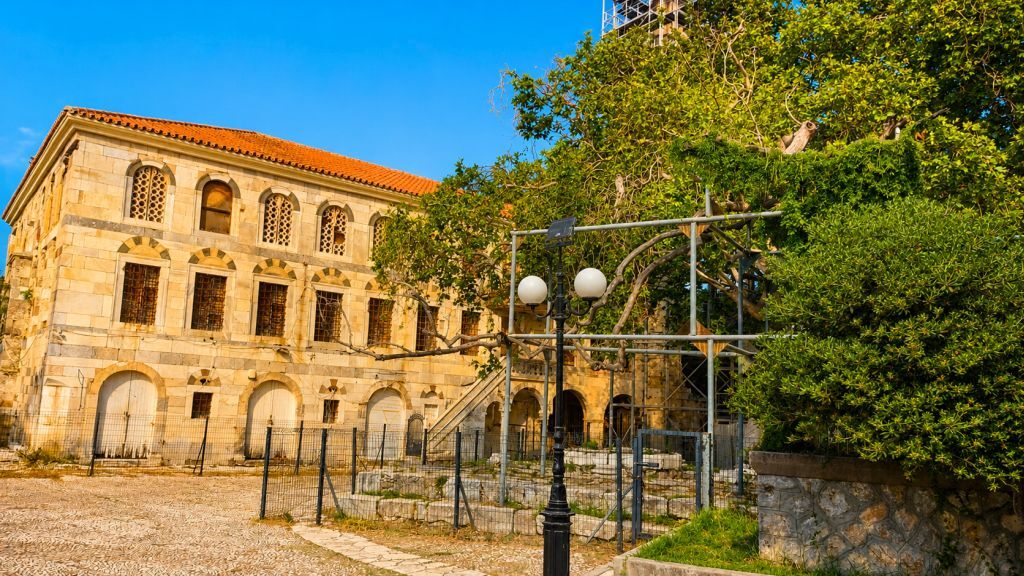
In a small square, next to the historic building that now serves as the headquarters of the Kos Police Department, stands the island's most famous tree – the Plane Tree of Hippocrates. According to local tradition, it was planted by Hippocrates himself, the Father of Medicine.
Legend has it that beneath the shade of this very tree, the great physician taught his students and shared his medical knowledge. Over the centuries, the site has become a symbol of the birth of medicine based on observation and experience, making it one of the most important landmarks on the island of Kos.
Another fascinating tradition is linked to the Plane Tree of Hippocrates. Around AD 60, Saint Paul the Apostle visited Kos during one of his missionary journeys. According to local tradition, he also preached beneath this tree, spreading the message of Christianity to the island's inhabitants.
⏳ How Old Is the Plane Tree of Hippocrates?
If the legend were true, the tree would now be around 2,500 years old. Botanists, however, disagree. Their research suggests that the existing plane tree is approximately 500–600 years old, meaning it cannot be the same tree under which Hippocrates taught. They do, however, believe it may have grown from the shoots or seeds of an ancient plane tree that once stood on this very spot.
Regardless of its actual age, the Plane Tree of Hippocrates remains one of the most visited attractions on the island of Kos.
Even from a distance, its impressive size is unmistakable. The trunk, weathered by time and damaged by fungi and insects, measures about four metres (13 feet) in circumference, while its broad canopy stretches nearly eighteen metres (59 feet) across. Combined with the strong winds that frequently sweep across Kos from autumn through spring, the tree's enormous crown places considerable strain on its aging trunk.
To help preserve this remarkable landmark, its heavy branches have been supported by a metal framework since 1975. A low stone wall surrounds the tree, protecting it from visitors who might otherwise be tempted to climb it.
Visitors should also notice the public drinking water fountain built into the surrounding wall—a welcome feature during the hot summer months on Kos.
🚶 What to See Nearby
The square where the Plane Tree of Hippocrates stands lies in the heart of Kos Town and is surrounded by some of the island's most important historical monuments. Just a short walk away is Neratzia Fortress, also known as the Castle of the Knights Hospitaller, which for centuries guarded the entrance to the harbour.
Unfortunately, the powerful earthquake that struck Kos in July 2017 caused significant damage to many of the island's historic buildings, including the fortress, which remains closed to visitors.
Adjacent to the plane tree stands the former Gazi Hasan Pasha Mosque, easily recognised by its elegant minaret, one of the few parts of the building to survive the 2017 earthquake. Be sure to admire the beautifully decorated upper-floor windows with their intricate stone tracery, as well as the domed ablution fountain in front of the mosque, once used by worshippers for ritual washing before prayer. The fountain was the part of the complex most severely damaged by the earthquake.
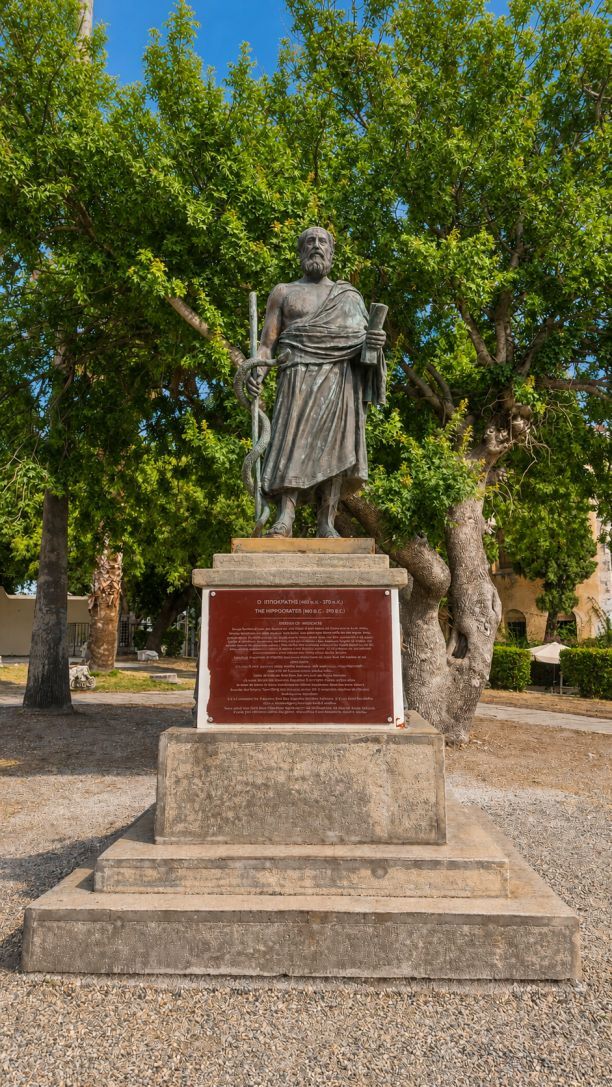
Approaching the square from the harbour, visitors are welcomed by the statue of Hippocrates. This monument to the Father of Medicine has become one of the symbols of Kos Town, inviting visitors to pause for a moment and discover the story of the man whose ideas transformed medicine and continue to inspire physicians around the world.