
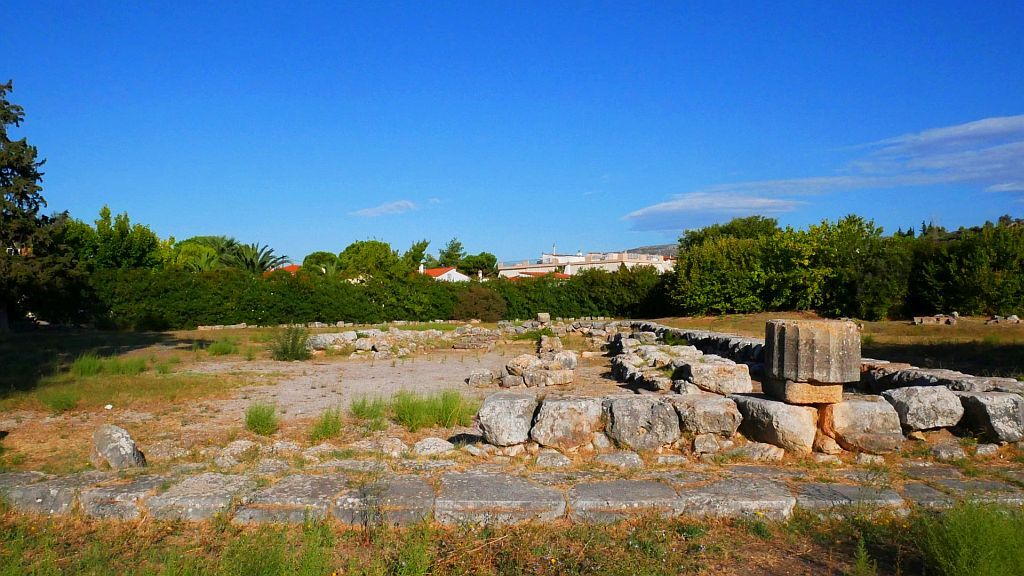
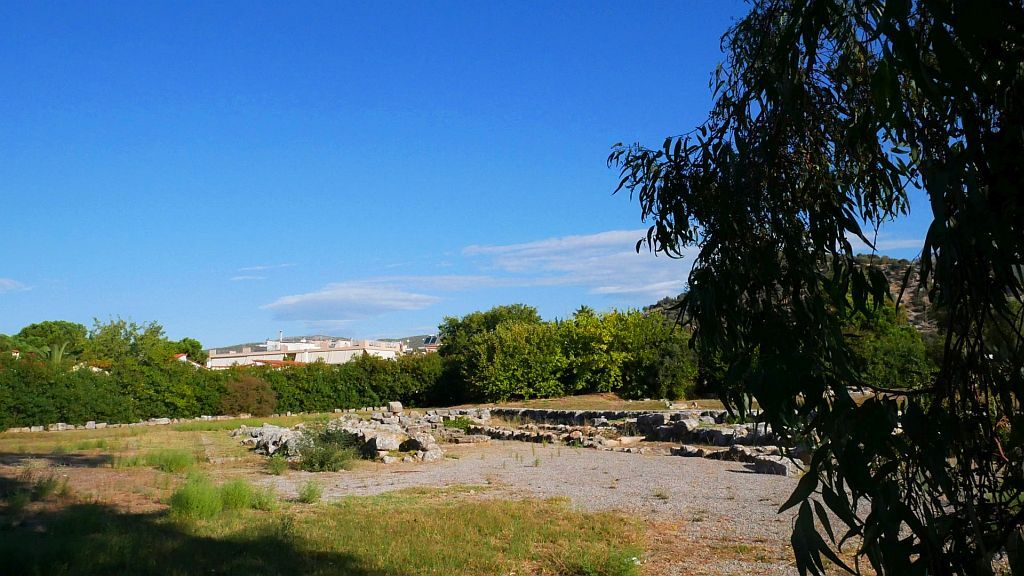
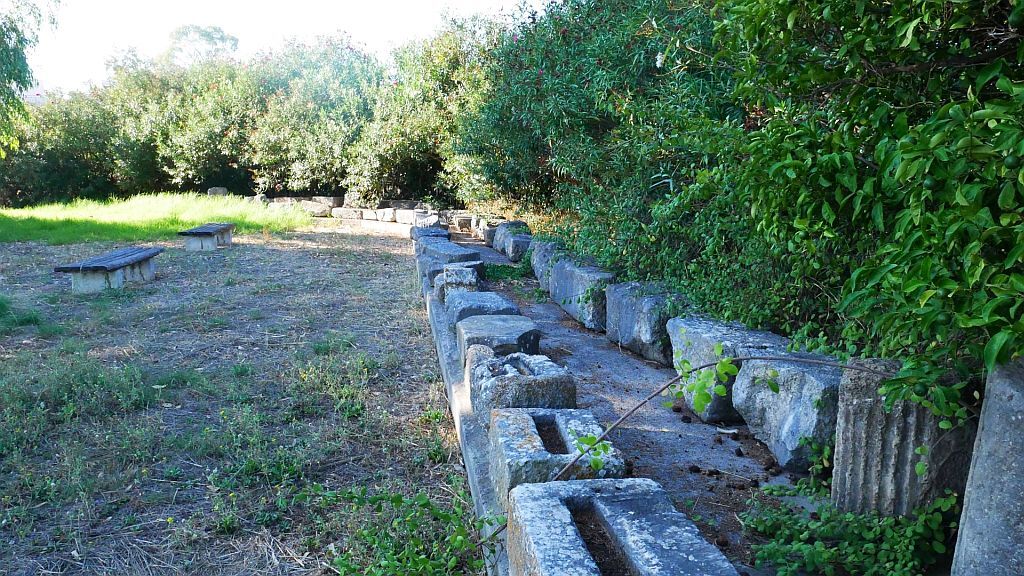
The Temple of Apollo in Eretria on the island of Euboea
is the most important and at the same time the most prominent religious center from ancient times Eretria.
Unfortunately, much indicates that the sanctuary we can see today had an extraordinarily short golden period and was never completed.
In the 16th century BC, the oldest temple stood here, or at least that is the assumption. It stood right by the sea, which today is about 0.5 km away.
The dimensions of the temple were impressive, measuring 7.5×11.5 meters in plan.
The sanctuary was associated with the then very strong cult of Apollo in Delphi. Wooden columns, six on the shorter side and nineteen on the longer, concealed a roofed sanctuary.
In the 6th century BC, the sanctuary was buried to build a new and more magnificent one in its place.
In 520 BC, the construction of a new temple Apollo began. It is likely that the construction was never completed as the Persian invasion in 490 BC leveled the entire city to the ground.
Nevertheless, the sanctuary was meant to become an impressive building.
And it was.
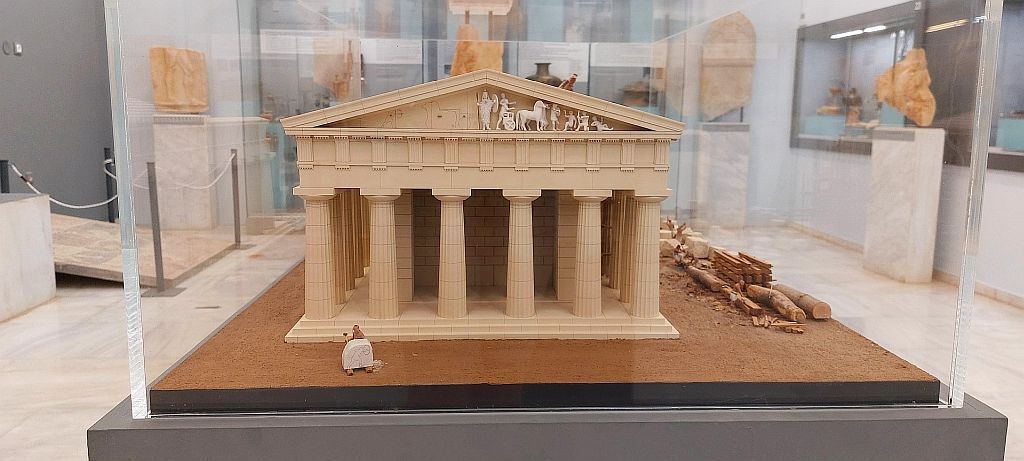
The new temple was partially built on the "old" one from the 7th century BC. Partially, as the new construction was to be much larger: 20.55 × 47.80 meters.
The Doric style was preserved.
The marble roof was supported by external columns numbering 6 along the shorter side and 14 along the longer side, as well as internal ones arranged in two rows dividing the temple into three inner aisles.
The interior consisted of a vestibule (pronaos), a main hall (naos or cella), and a back chamber (opisthodome).
After the Persian invasion, the city planned to rebuild the sanctuary, but another invasion in 198 BC, this time by the Romans, thwarted the expansion plans.
To this day, little remains of the temple as, like many pagan sanctuaries, building materials were used in constructing early Christian churches. No one at the time cared for the special use of the richly carved fragments of the building; they were as much building material as the simplest stone blocks.
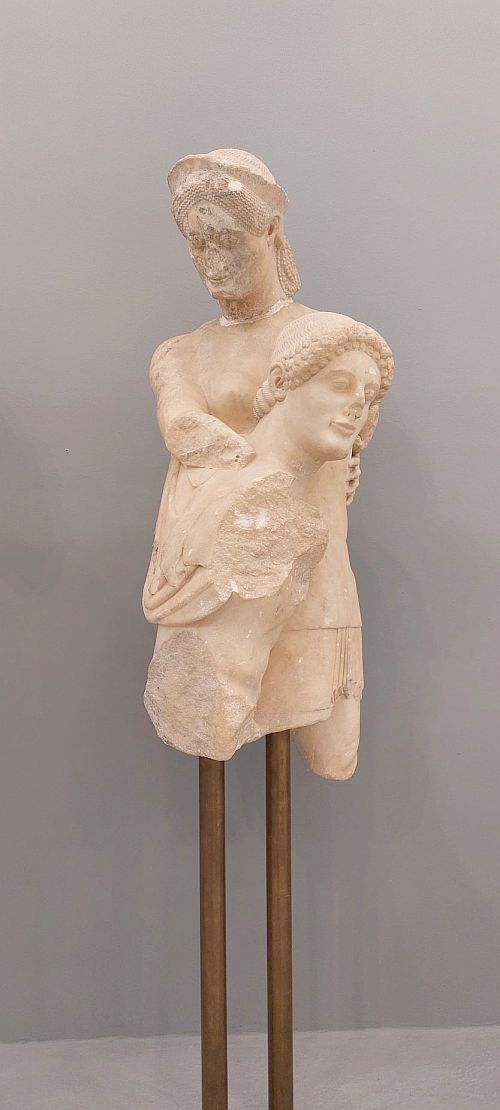
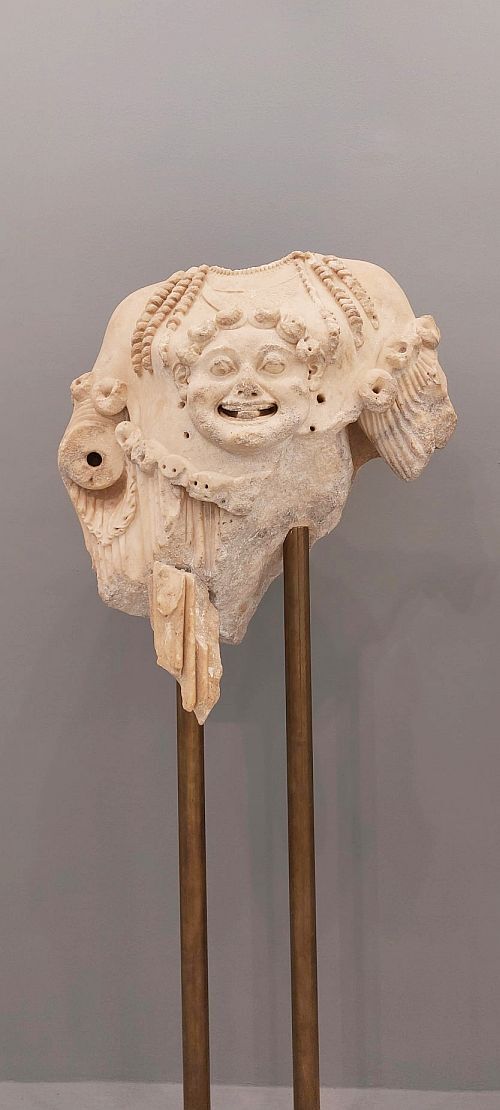
A few pieces of sculptures adorning the western pediment depicting the battle of Theseus against the Amazons, and Athena who was placed at the central point of the tympanum, have survived. They are located in the Archaeological Museum in Eretria.