
The Acropolis in Eretria on Evia
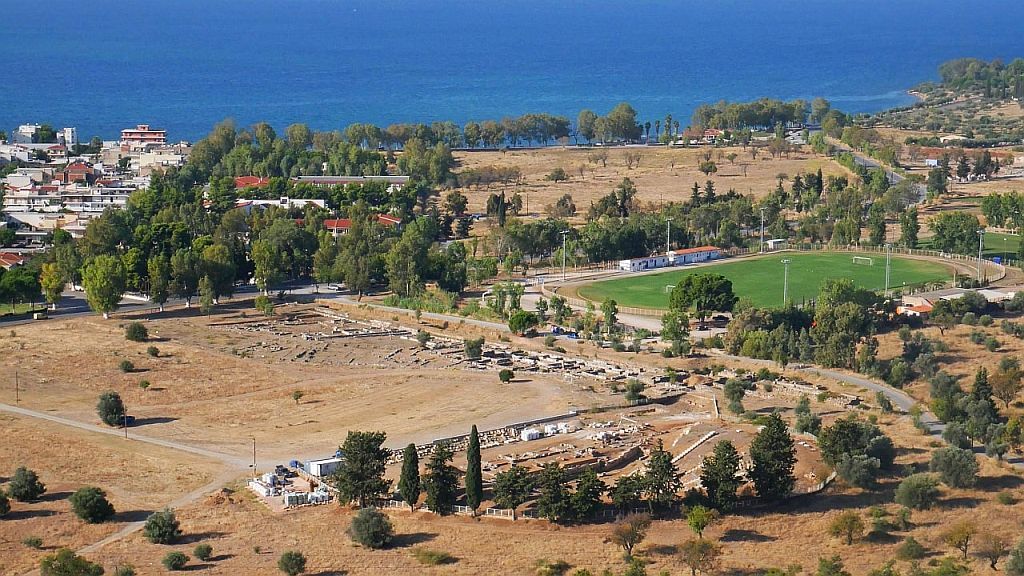
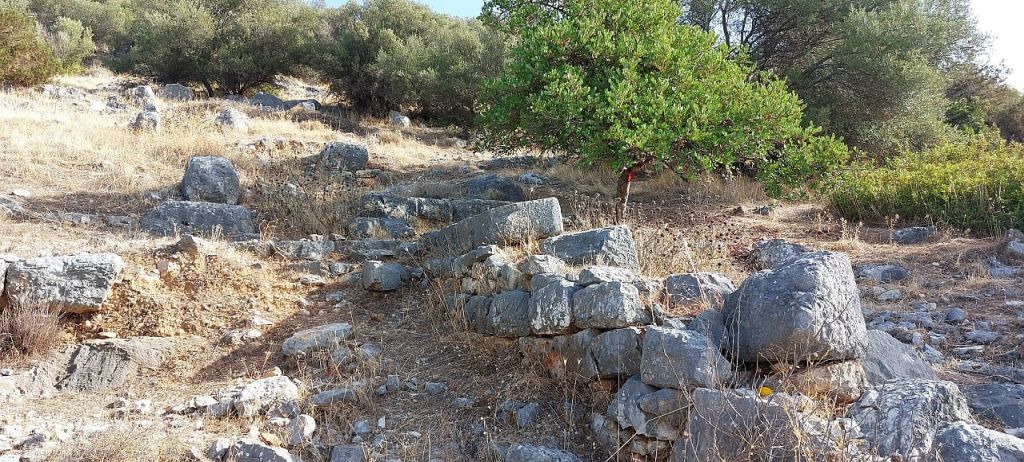
is completely free and open 24 hours a day. The buildings are not restored. Moreover, one has to put in quite a bit of effort to discern the outlines of the ancient temples, towers, and other structures. Yet, in ancient times, the place was bustling with life.
There were two temples here: one dedicated to Athena, the other to Demeter, as confirmed by the numerous ceramic fragments and votive items found here.
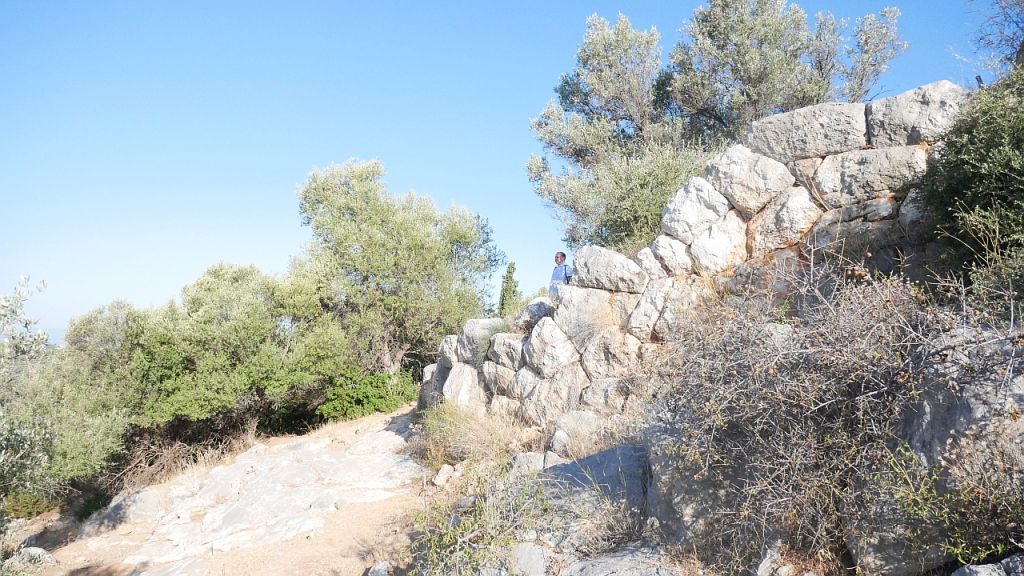
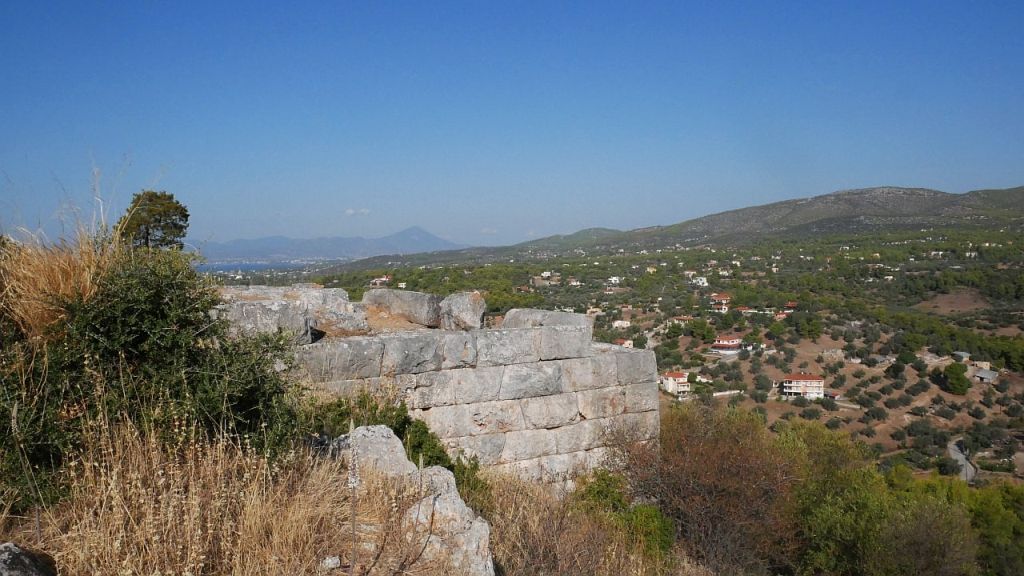
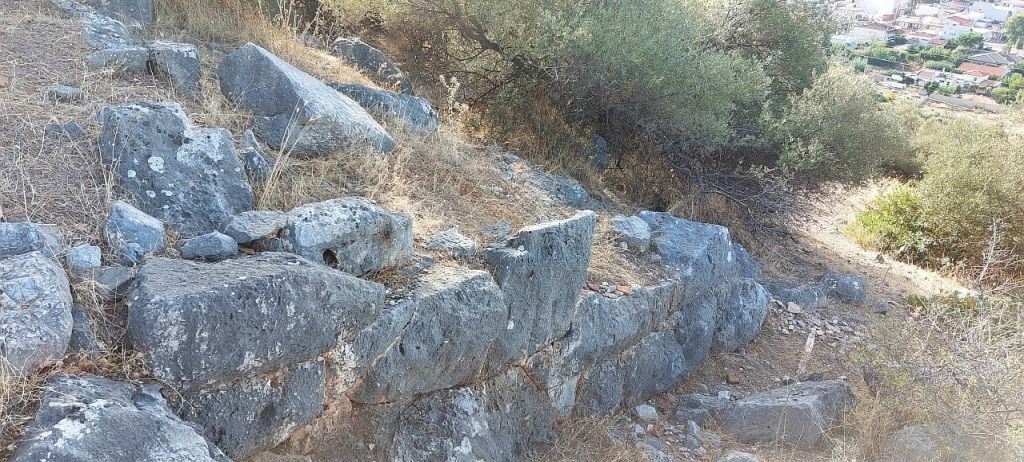
It is known that there were about 60 towers, many public buildings, and even residential ones. The city wall has been very well preserved, which still attracts the attention of anyone entering the hill.
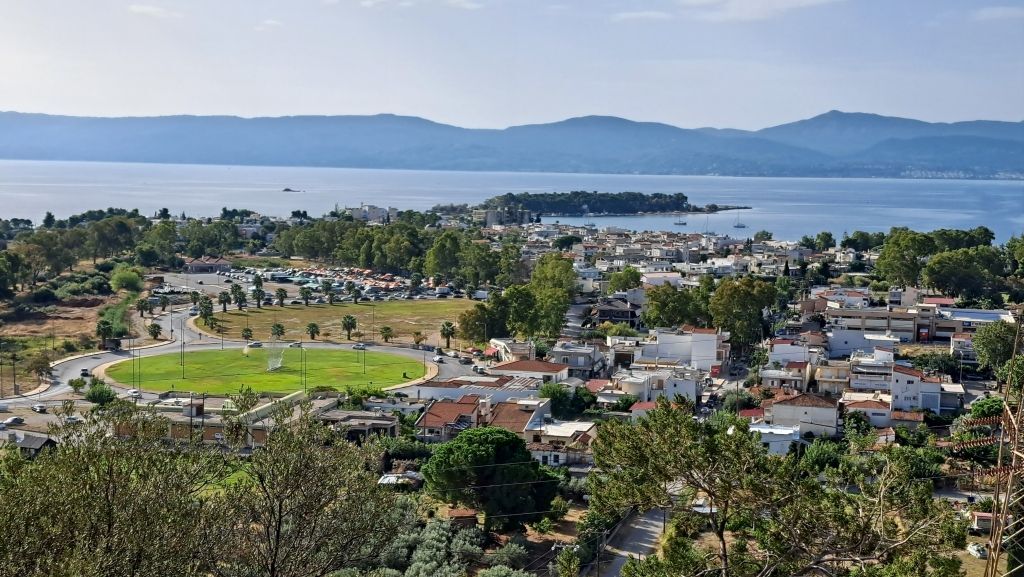
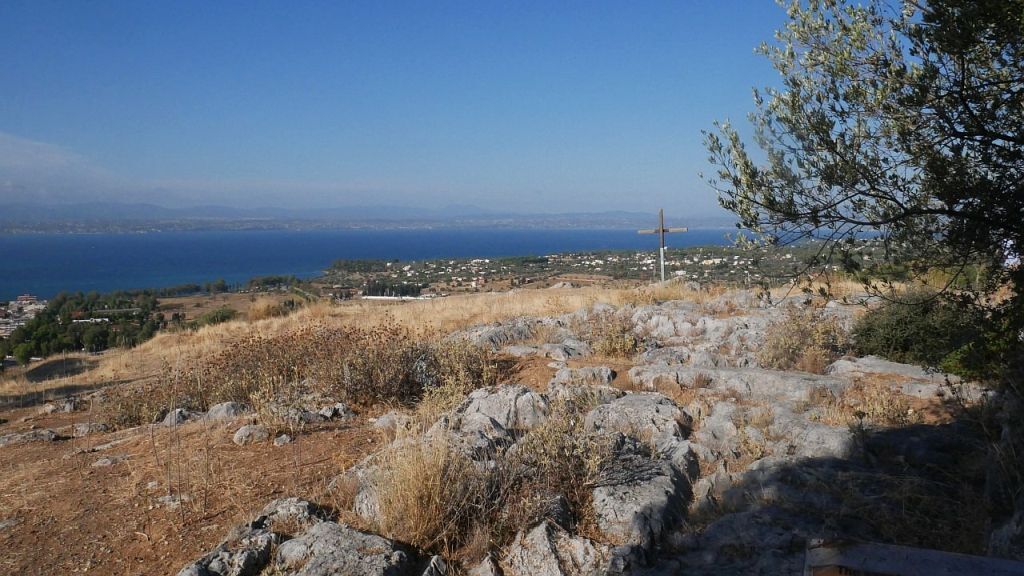
Nonetheless, from the Acropolis, there is a fairy-tale view of the entire Eretria, the port, and the sea. It is worth climbing just for this landscape.
The fortification wall
It is believed that the first fortifications were built in the 6th century BC. Most of those that have survived to this day were constructed in the 4th century BC. Later repairs, reconstructions, and additions, mainly in the form of towers, date from the transition between the 4th and 3rd centuries BC.
In antiquity, the wall's length was almost 5 km. It surrounded the entire city, including the hill. It was double-faced, meaning it had flat vertical surfaces on both sides. Its thickness exceeded 2 m, which, along with the numerous towers and battlements (the so-called teeth), indicates its defensive significance.
The height of the original walls was impressive, ranging from 5 to 7.5 m.
The wall was built using stone and mud bricks known as sun-dried, made from a mixture of soil with water and organic materials such as straw or dung, which were then formed and dried in the sun.
It is estimated that 31,000 m³ of stones and 30,000 m³ of mud bricks were used to build the city walls.
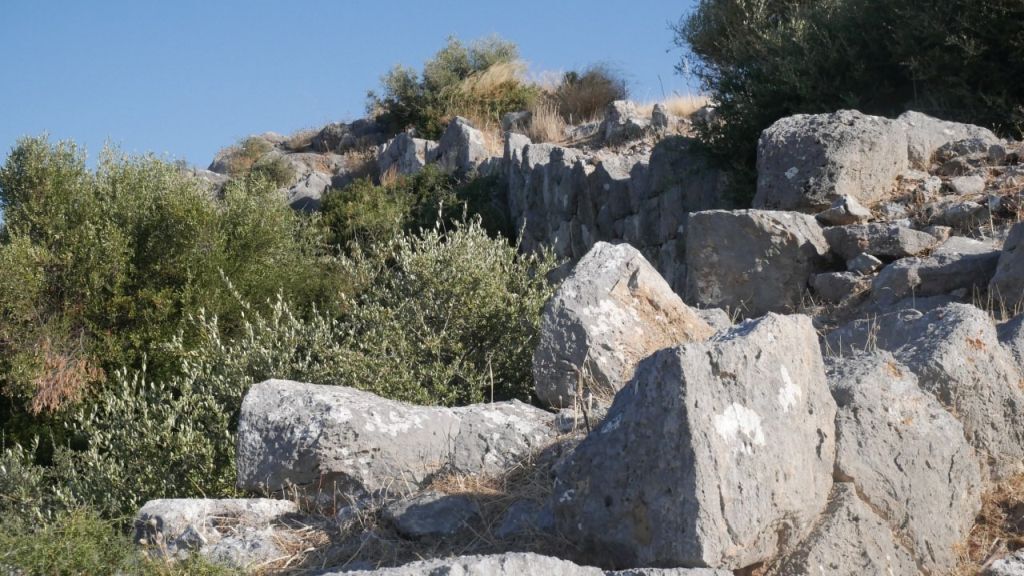
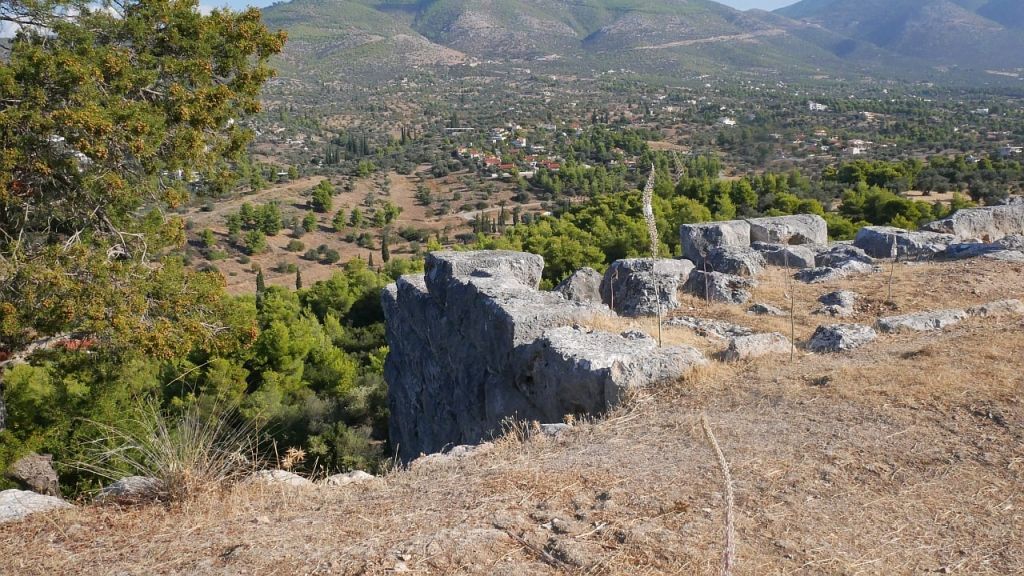
To this day, large sections of the wall have survived. The most visible is when entering the acropolis, as it surrounds the upper ridge and southern slopes.
The mentioned towers were always primarily built in places with good visibility of the surrounding area. The existence of 38 towers has been confirmed, but it is estimated that there were as many as 60.
In the northern part of the plateau, the highest tower of the city walls has been preserved, known as the Northern Tower. It stands out from the others due to its size. The dimensions in plan were 9.8×7.8 meters. The wall itself was between 4 and 5 m high. Due to its location, the tower served as an excellent observation point and defended the northern access to the acropolis.
Reinforced with internal walls, it could accommodate artillery machines such as small catapults.
Sanctuary of Athena
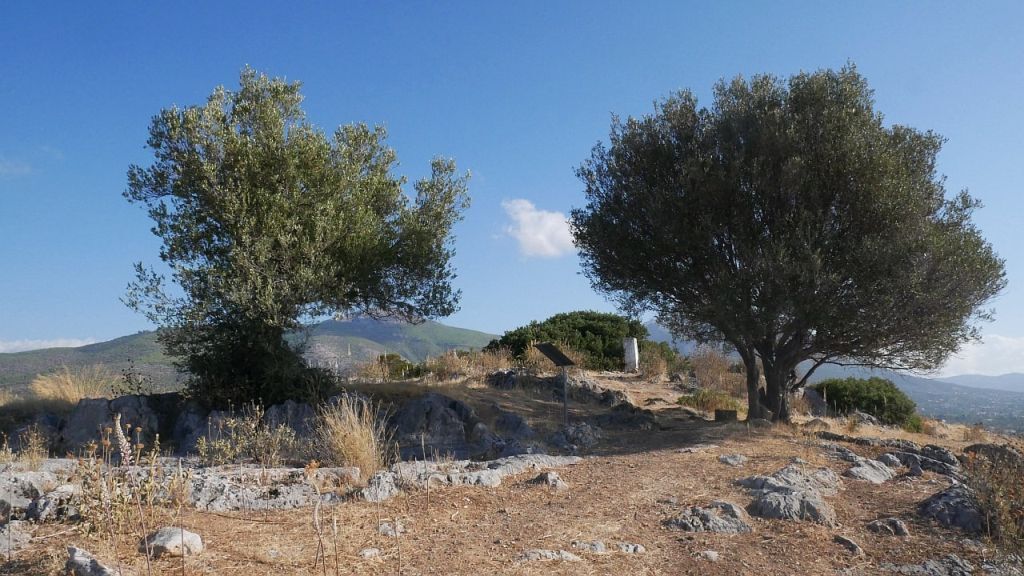
If it weren't for the information plaque at the top of the acropolis, it would be hard to guess that any building once stood here. The only thing that remains of the temple is the stone foundation.
And although it may seem like a piece of exposed rock, this very terrace piques the greatest interest of archaeologists. A large esplanade, or wide, undeveloped space, creates a rough area about 6 meters wide and approximately 20 meters long.
The rock foundation preserved to this day has been hewn horizontally and vertically on the north side, reaching heights of up to 60 cm in places. The precision of the workmanship is extraordinary, as the height difference along its entire length fluctuates by barely 2 to 3 cm! It is said that this sparked significant interest from the Swiss school, which systematically uncovered the acropolis area between 1993-1995, 2006-2007, and 2014.
The fact that the sanctuary was dedicated to Athena is evidenced by the dedication remnants discovered in the crevices of the foundation, dedicated specifically to this goddess. It is believed that the origins of the cult at the top of the acropolis date back to the 7th-6th century BC, although the terrace described above originates from the 3rd century BC.
Unfortunately, no architectural elements of the structure have survived.
Residential Settlement
Excavations beneath the terrace revealed an important prehistoric settlement, inhabited until the 2nd millennium BC. A unique find from this period is a small Cycladic marble figurine, which can be seen in the Archaeological Museum of Eretria.
Temple of Artemis and Temple of Demeter
On the southern slope of the acropolis, the remains of two temples were found. It is hard to see them "from below" as they are not marked in any way, and the remnants of the walls, although clearly outlined, blend in with other natural stones of the elevation.