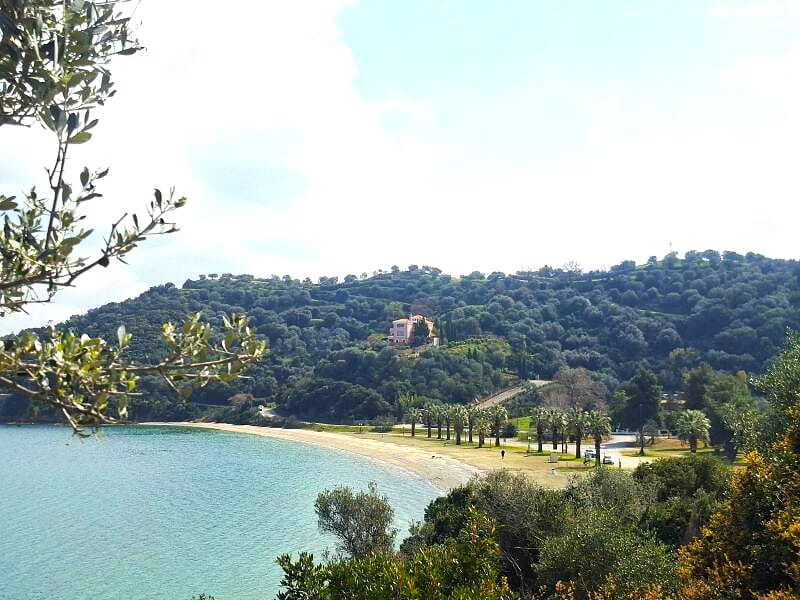
Oreoi in the north of the island of Euboea
The name Oreoi comes from the ancient city of Oreus, formerly known as Histiaia, an extremely important settlement on the island inhabited until the end of the 5th century BC. People lived well here mainly due to the vast and fertile plain at the entrance to the Euboean Gulf.
In 480 BC, the Battle of Artemisium took place here. The naval clashes lasted only three days but ended badly for the locals. Histiaia was taken over by the Persians.
After expelling the invaders, the entire Euboea was subordinated to Attica.
In 446 BC, Histiaia participated in the revolt against Athens for which it paid dearly. The inhabitants were expelled from the city and all their properties were taken over by colonists from Athens.
From that time, the city was called Oreus.
At the end of the Peloponnesian War, in 404 BC, Sparta expelled the colonists from Athens. Some of the former inhabitants returned to the city. Grateful for regaining their lands and possessions, they were loyal to Sparta and harbored a lasting hatred for Athens.
The following years were marked by wars that the city of Oreus, due to its geographical location and fortifications, could not avoid.
Today, Oreoi leads a peaceful life. The town is frequently visited by tourists as there are several places worth seeing.
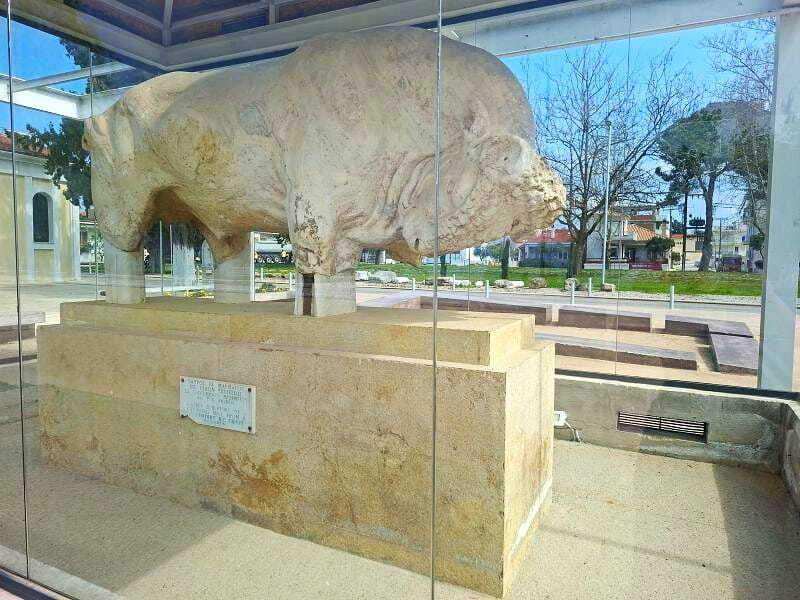
The Bull from Oreoi
During the port expansion in August 1965, a sculpture of enormous size was discovered.
The marble bull measures 3.20 meters in length and 1.30 meters in height. It weighs almost 5 tons, and its volume is close to 3 cubic meters.
This is one of the largest statues ever found in Greece.
The sculpture was likely part of a funerary monument from the late 4th century BC.
The marble bull is displayed near the beach, right next to the Archaeological Collection.
Looking at the sculpture, it is evident that the author's intention was to depict a muscular, strong animal captured in the moment of attack.
Its head is pulled down and slightly tilted to the right, creating folds of skin. The hair on its head appears between the eyes and on the upper part of the head. The eyes have a strongly pronounced upper eyelid. They seem focused on the attack.
At the back of the sculpture, a fragment of the tail's base and its tip on the right thigh have been preserved.
The lower parts of the limbs have not survived. They likely broke off as they could not support the massive weight of the statue. Of the existing thighs, the upper part of the right hind leg stands out. It is vertical, suggesting that from the knee down it was bent backward, as if forcefully striking the ground and preparing for an attack.
The carvings and finishing of the bull vary depending on the side. The left side of the sculpture is rough, while the right side is shiny and intricately carved. This fact proves that probably only the right side was visible.
Archaeological Collection
The present-day town is located on the site of ancient Oreus.
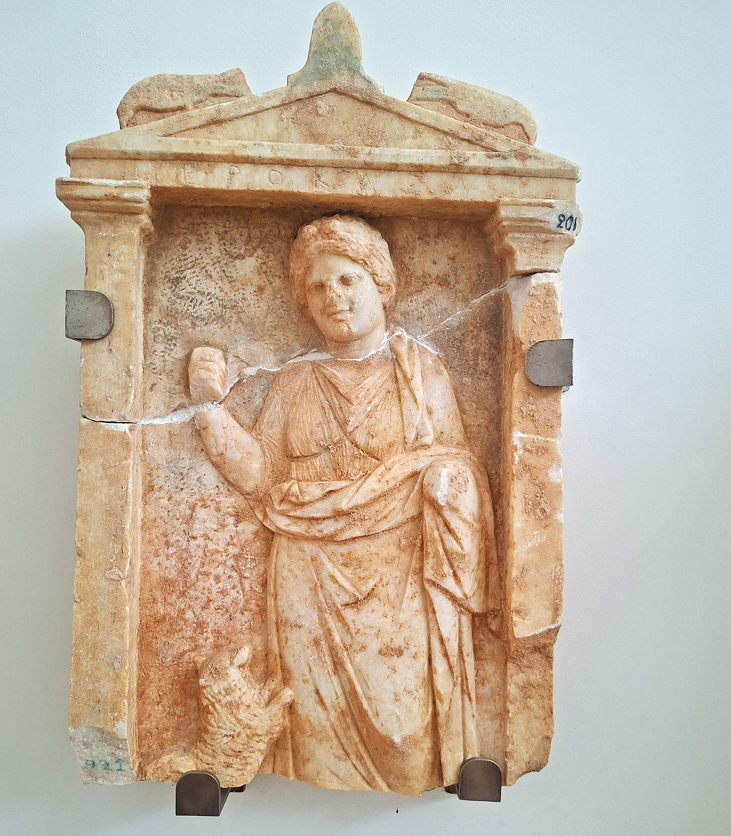
Findings from the excavation works are stored in a small building by the port. The town believes it will have its own proper Archaeological Museum one day.
Among the exhibits stand out: the torso of a male statue found in the Istiaia region, relief grave steles, parts of breastplates from the 5th century AD, as well as a piece of a jewel with flat decoration from the 9th century AD.
Some sculptures belonging to the ancient city are housed in the Berlin Archaeological Museum in the Pergamon Hall and are spoils that Attalos brought to Pergamon after the conquest of Oreus.
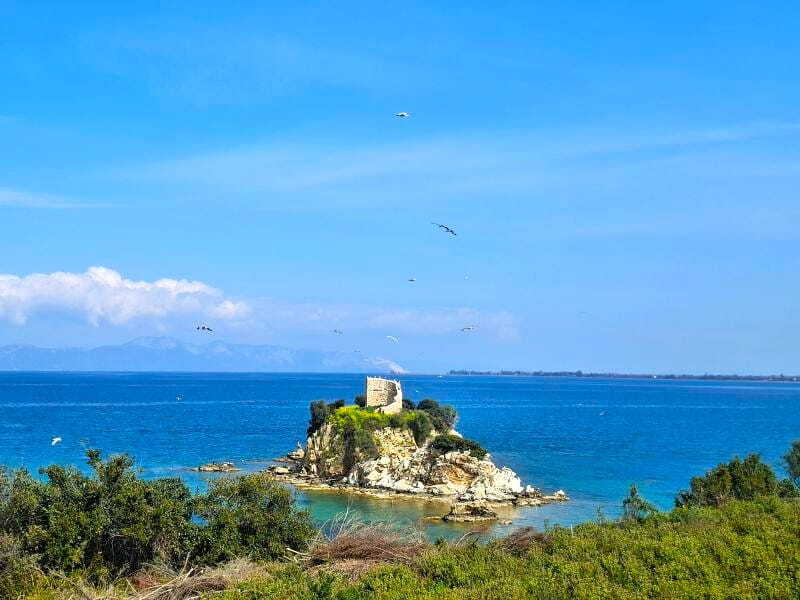
Nisiotissa Beach on Evia
About 11 km northeast of Loutra Edipsou, there is a charming beach called Nisiotissa. The beach itself is small and tranquil, with palm trees and crystal-clear water.
However, that's not the most interesting part.
A few dozen meters from the shore of the eastern part of the beach, there is a small rocky islet that one can swim to independently. At the top of the islet are the ruins of a round structure, the precise nature of which is unknown. However, it is known to date back to the 13th or 14th century.
According to recent studies, the ruins are likely remnants of a Frankish mill. In the past, it was thought to be a small church that was modified by the Turks during their occupation.
Castle
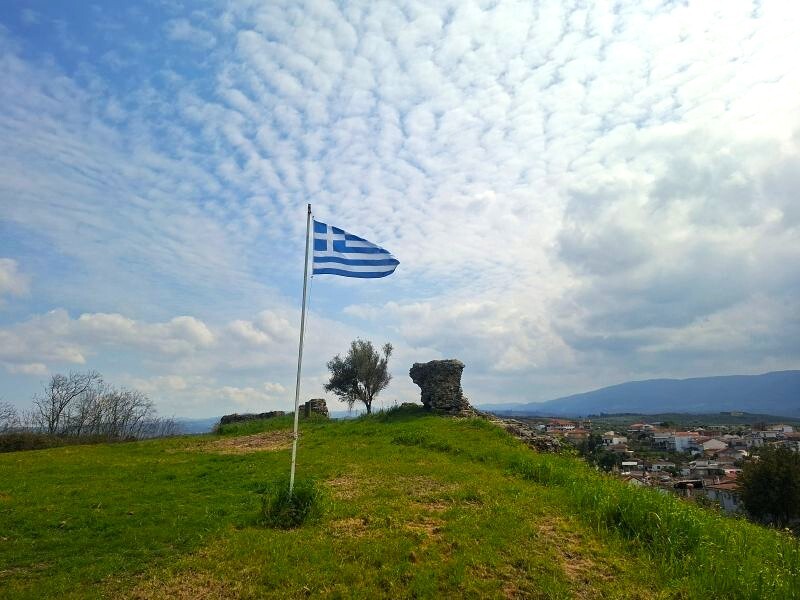
On the outskirts of the town, on a small hill, the ruins of a Byzantine castle have been preserved, likely built on the walls of the Acropolis.
According to archaeological research, a citadel was already here in the 4th century BC.
It is said that the hill was artificially raised by people who carried soil for years.
The castle was rebuilt during the Venetian rule. It gained great fame after 1275, thanks to a knight who used the structure as a base against the Franks.
The fort had two underground, secret entrances, which were difficult to find even for the locals.
The fortress was used both during the Venetian and Turkish periods.
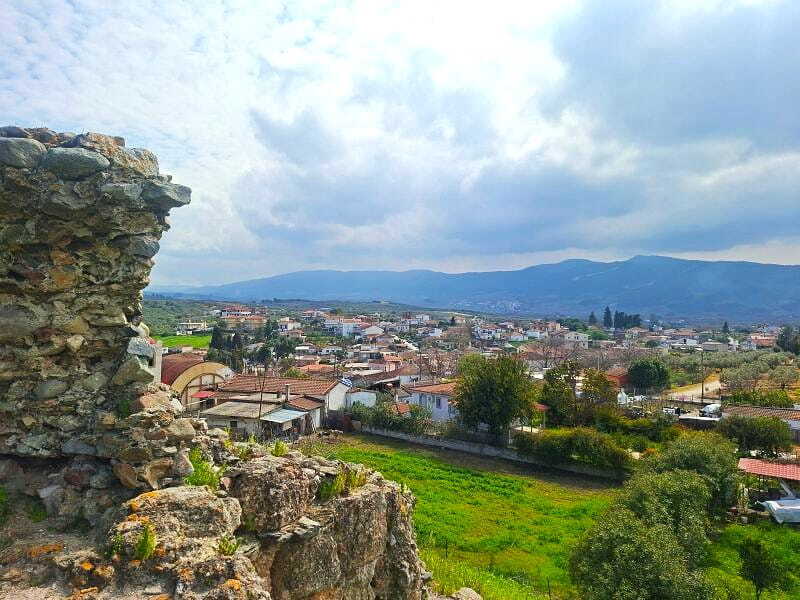
Today, there is not much to see. Fragments of walls up to 2.5 meters high have been preserved.
From the hill, there is a unique view of the town of Oreoi.
Below the castle, there is a small single-nave church dedicated to Saint Basil. It is worth noting because in front of its entrance there is a burial in a marble sarcophagus, which scholars attribute to Bishop Ioannis of Oreoi.
A peculiarity of the church, which was likely previously a cemetery, is that it has an interesting, rock-carved Holy Altar.
Galatsades Fountain
The village of Galatsades consists of a few houses surrounded by vegetation. According to Wikipedia, in 2021 the settlement was inhabited by only 43 residents.
It is worth stopping here for a few days to feel the truly Greek atmosphere.
The settlement played an important role during the Turkish occupation.
The logging of local trees was a source of wealth for the villagers.
Probably invaluable forest products led the Turks to build their headquarters here, the remains of which foundations have survived to this day.
The foundations of the Turkish residence and the fountain testify to this fact.
The fountain was built by the Turkish governor in memory of his son who died at a young age. On a stone slab embedded in the wall above the fountain, there is an inscription in Arabic dated 1803:
"Whoever comes and drinks the water, let him forgive my only son Mustafa."