
🇮🇹 A Museum We Owe to the Italians
The Archaeological Museum of Kos was built between 1934 and 1936, during the period of Italian rule over the island. Following the devastating 1933 earthquake, Italian archaeologists launched extensive excavations that uncovered many of the remarkable artifacts displayed in the museum today.
Thanks to their work, visitors can admire sculptures, mosaics, and inscriptions discovered at the Ancient Agora, Casa Romana, the Gymnasium, and the Odeon. The museum became the home of the island's most important archaeological treasures, preserving the finest surviving evidence of ancient Kos.
🚶 Is the Archaeological Museum Worth Visiting?
Absolutely. Even if you only have an hour to spare, the museum offers a completely different perspective on ancient Kos. Here, the ruins regain their faces, and the stories of the island's people become far easier to understand.
📌 Key Takeaways
The Archaeological Museum of Kos is much more than a collection of beautiful artifacts. It brings together the discoveries from the city's archaeological sites into one coherent story—revealing the people, the gods, and the rich history that shaped Kos Island over thousands of years.
Ruins reveal the places,
but the museum introduces you to the people who brought them to life.
Only by experiencing both can you truly understand the story of ancient Kos.
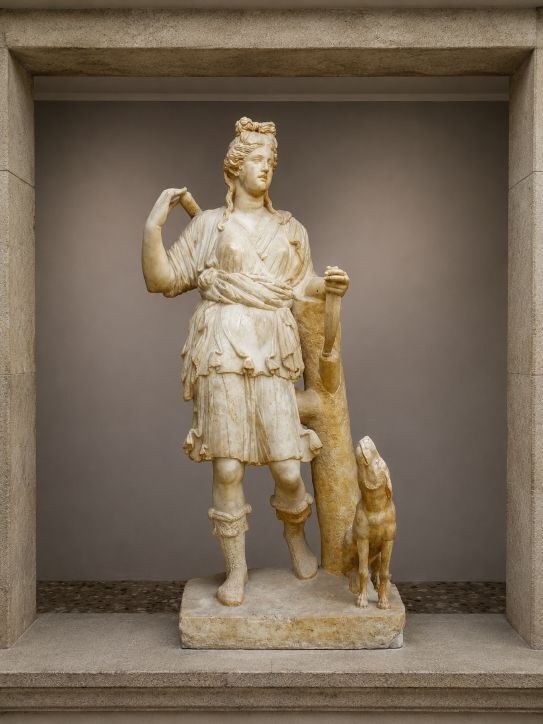
📸 Statue of Artemis, dating from the 2nd century AD. The Greek goddess of the hunt and protector of the natural world was also worshipped by the people of ancient Kos, as evidenced by surviving sculptures and inscriptions discovered across the island.
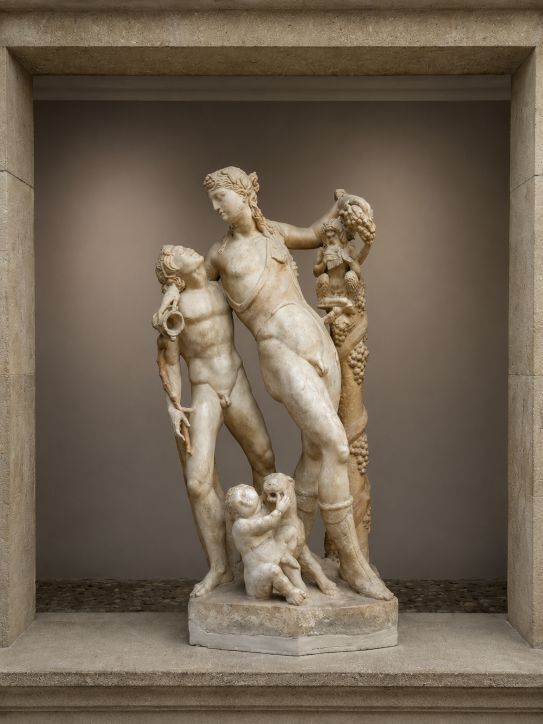
📸 Sculptural group of Dionysus, a Satyr, and Pan, dating from the 2nd century AD. Dionysus was one of the most important deities worshipped on Kos, as reflected by the monumental Altar of Dionysus discovered near Casa Romana. This remarkable sculpture offers a glimpse into one of the island's most significant ancient cults.
🏛️ The Gods Worshipped on Kos
Although Kos is best known for Asclepius and its medical heritage, the island's inhabitants also worshipped many other Greek gods. The remarkable sculptures displayed in the Archaeological Museum of Kos offer a fascinating glimpse into this rich religious world.
Among the museum's highlights is a sculptural group depicting Dionysus accompanied by a Satyr and Pan. The monumental altar dedicated to Dionysus was discovered near Casa Romana, and these sculptures help visitors imagine the appearance of a god whose cult was among the most important on the island.
Nearby stands a statue of Artemis, the goddess of the hunt and protector of the natural world. Although no grand temple dedicated to her survives on Kos, historical sources and archaeological discoveries confirm that she, too, was widely worshipped by the island's inhabitants.
💡 Did you know?
As you explore Kos, you'll encounter the same gods in different places. First you'll discover their sanctuaries and places of worship among the archaeological sites, and later you'll meet them again through their statues in the museum. Together, they offer a vivid picture of the religious life of ancient Kos.
📸 Mosaic of Hippocrates and Asclepius, dating from the late 2nd to early 3rd century AD. It is one of the most valuable treasures of the Archaeological Museum of Kos and a lasting symbol of the island's rich medical heritage.
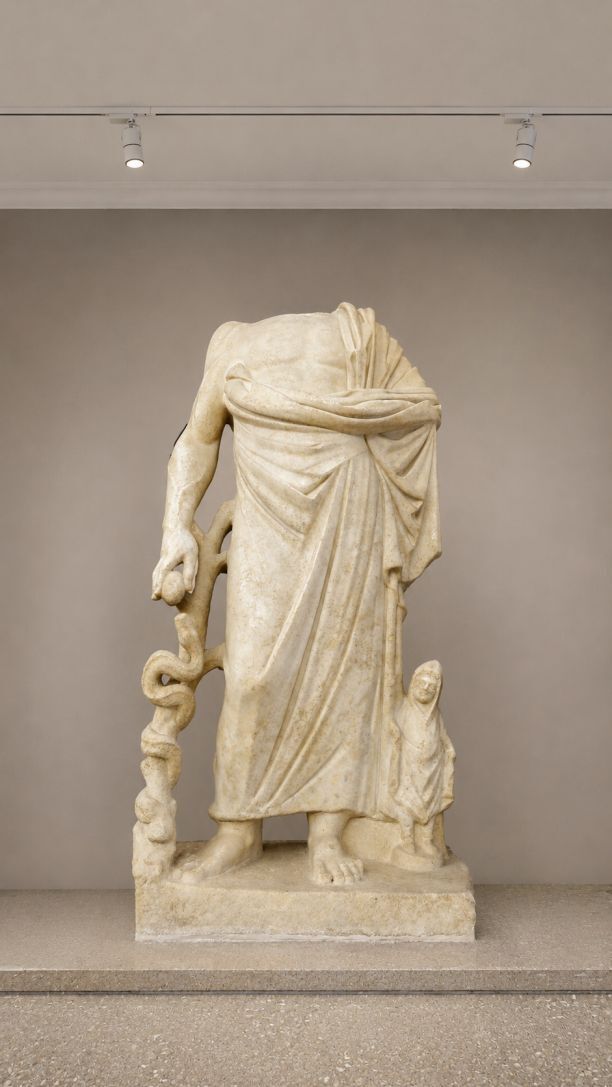
📸 Statue of Hygieia, dating from the 3rd century AD. The daughter of Asclepius and the Greek goddess of health, Hygieia symbolizes the importance of preventing illness as well as treating it—a principle that was central to the medical tradition of Kos. Her name is the origin of the modern word "hygiene."
⚕️ Hygieia – The Goddess Who Gave Us the Word "Hygiene"
One of the museum's most fascinating exhibits is the statue of Hygieia, the daughter of Asclepius and the Greek goddess of health. In one hand she holds a serpent, the timeless symbol of medicine; in the other, an egg, representing new life and renewal. At her feet sits Hypnos, the god of sleep, reminding us that even the ancient Greeks regarded rest as one of the foundations of good health.
On Kos, Hygieia held a special place in religious life. At the Asklepieion, visitors worshipped not only Asclepius but also his daughters, each representing a different aspect of health and healing. It is from Hygieia's name that the modern word "hygiene" is derived.
Interestingly, the Hippocrates Foundation on Kos displays a relief showing Asclepius and Hygieia caring for the sick together. It serves as a beautiful reminder that ancient physicians believed medicine was not only about curing disease, but also about preventing illness and promoting a healthy way of life.
🔍 Take a Closer Look
Notice the symbols Hygieia carries. The serpent represents healing and medicine, while the egg symbolizes life, renewal, and rebirth. At her feet sits Hypnos, the god of sleep—a subtle reminder that the ancient Greeks already understood the vital role that rest plays in maintaining good health.
📸 Statue of Asclepius, dating from the 2nd century AD, discovered on Kos Island. The Greek god of medicine was especially revered on the island, and his sanctuary—the Asklepieion—became one of the most famous healing centers of the ancient world.
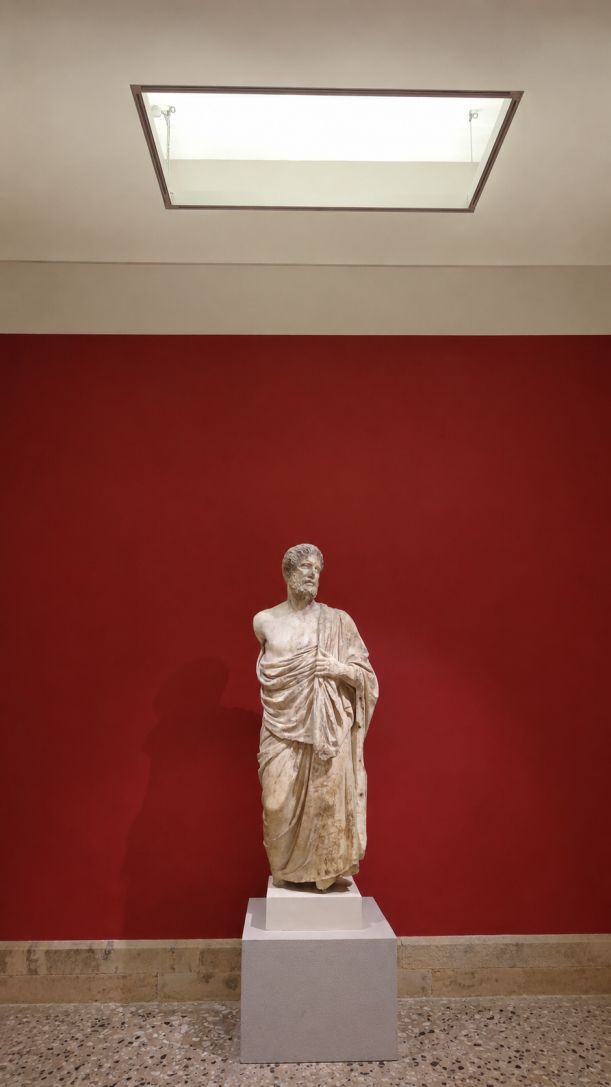
📸 Statue traditionally identified as Hippocrates, dating from the 4th century BC. Although long believed to portray the famous physician, many scholars now suggest it may instead depict another distinguished doctor from the Asclepiad family. The statue was discovered during the archaeological excavations of the Roman Odeon in Kos Town.
⚕️ Hippocrates, Asclepius and the Legacy of Medicine
It is no coincidence that the museum's first galleries are dedicated to figures associated with medicine. Thanks to Hippocrates and Asclepius, Kos became one of the most important centers of healing in the ancient world. You'll encounter their legacy not only in the museum but also while visiting the Asklepieion and the Hippocrates Foundation.
One of the museum's most remarkable exhibits is a 2nd-century AD marble statue of Asclepius.
It portrays the Greek god of medicine holding his iconic staff entwined by a serpent—a symbol that has represented physicians and the healing arts for more than two thousand years and remains recognized around the world today.
Archaeological Museum of Kos – The Greatest Treasures of the Ancient Island
An unassuming building on Eleftherias Square houses some of the most valuable archaeological treasures ever discovered on Kos Island. This is where the sculptures, mosaics, inscriptions, and other remarkable finds uncovered by Italian archaeologists across Kos Town were brought for preservation. After visiting the Ancient Agora, Casa Romana, the Gymnasium, or the Odeon, the museum is the perfect place to see the original masterpieces and gain a deeper understanding of the places you've just explored among the ruins.
🏛️ Why Visit the Archaeological Museum?
After exploring the Ancient Agora, Casa Romana, the Gymnasium, and the Odeon, it's easy to feel that ancient Kos survives mostly as foundations, walls, and scattered columns. The Archaeological Museum reveals the other half of the story.
This is where the ruins regain their faces, forms, and intricate details. At the archaeological sites, you see the places where history unfolded. In the museum, you encounter the sculptures of gods, magnificent mosaics, inscriptions, and everyday objects that once filled those very spaces.
Together, they bring ancient Kos back to life, making it much easier to understand how its people lived and why these monuments played such an important role in their world.
🔍 Take a Closer Look
In many archaeological sites, the original artifacts have been moved to museums for protection, while replicas or reconstructions remain in their original locations. On Kos, this is especially true for sculptures and mosaics—some of the island's finest and most valuable masterpieces can only be seen here in the museum.
🎨 More Than Ruins – See What Ancient Kos Really Looked Like
One of the first exhibits to catch your eye as you enter the museum is the impressive mosaic of Hippocrates and Asclepius. Created in the late 2nd or early 3rd century AD, it is composed of thousands of tiny stone tesserae.
This masterpiece is far more than a beautiful decoration. It symbolically brings together the two figures most closely associated with Kos—Hippocrates, regarded as the Father of Modern Medicine, and Asclepius, the Greek god of healing. Together, they represent the medical tradition that made the island one of the most renowned centers of healing in the ancient world.
Standing before this mosaic, it becomes clear that the story of Kos is about much more than temples and ruins. It is also the story of the people whose ideas and achievements made the island famous throughout antiquity.
💡 Did you know?
The Hippocrates and Asclepius Mosaic is displayed in the museum's central atrium and is one of the very first exhibits visitors encounter. From the moment you step inside, it reminds you that Kos has been associated with medicine and the legacy of Hippocrates for more than two thousand years.